• Skip to main content
  • Skip to footer
Unleashed Potential
  • Classes
  • UPX
  • Board and Train
  • Day Train Program
  • Find a Trainer
    • Become A Trainer
  • The UPK9 Blog
  • Store

Duke Ferguson

Why Your Dog Isn’t Listening — And What to Do About It

March 7, 2026 By Duke Ferguson Leave a Comment

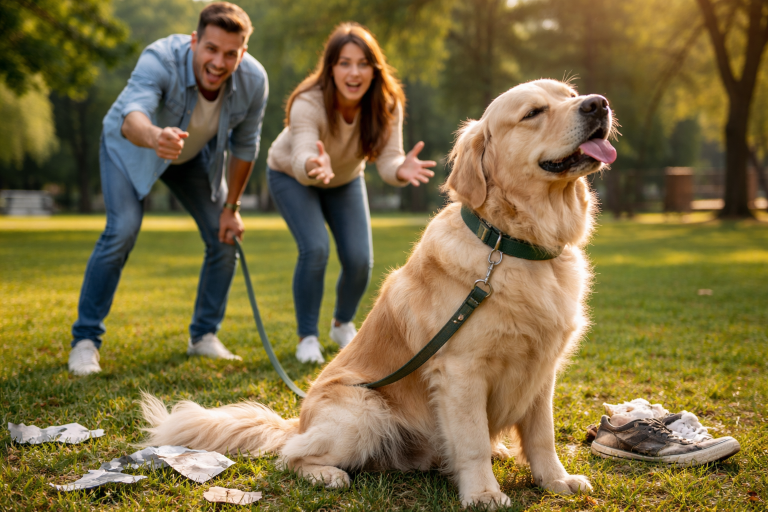
Dogs are incredible communicators. The problem? Most people are speaking the wrong language. Here are the four channels your dog actually understands — and how mastering them will transform your relationship.

If you’ve ever found yourself repeating commands, raising your voice, or wondering why your dog tunes you out the moment you need them most, you’re not alone. I hear it every week. But here’s what I want you to understand right from the start: this is almost never a motivation problem. In my experience training dogs — and coaching the humans who love them — the real issue is almost always a communication breakdown.

Dogs don’t understand our words the way we do. When you’re talking to your dog, they’re essentially hearing “want, want, want, want.” The words themselves mean nothing until you give meaning to them. And the mismatch between how we try to communicate (mostly through language) and how dogs actually receive information is exactly where the confusion begins.

Dogs use four primary communication channels: scent, body language, vocal tone, and touch. Let me break each one down — and show you how the same principles apply to your relationships with people, too.
Why Your Dog Isn't Listening — And What to Do About It

Channel 1: Scent — Your Emotional State Speaks Before You Do

Dogs live in a scent world. Their olfactory system is their primary information system, and it is extraordinarily powerful. Your dog can smell your stress hormones, your fear, your emotional state — and they’ve clocked all of it long before you’ve opened your mouth.

Think about that for a second. If you walk into a training session anxious or frustrated because of a tough phone call you just had, your dog already knows. They’re already responding to you — and not in the way you want them to.

This is why I talk so much about regulating yourself first. Breathwork matters. Calming your nervous system before you engage with your dog isn’t just a nice idea — it’s foundational. I’ve seen it with my own dog Cole, a medium-drive dog I’ve had for six years now. He is incredibly sensitive to my emotional state, and half the time, he’s the one catching me off guard and reminding me to check in with myself.

Humans aren’t that different. We don’t smell each other the way dogs do (thankfully), but we absolutely pick up on emotional energy when we walk into a room. You’ve felt the tension in a room before anyone said a word. So have your dogs — only they’re picking it up through their nose.

My challenge to you: before your next training session — or your next important conversation with a person — take three to five slow breaths. Give your nervous system at least ten seconds to settle. Calm leaders change the environment. Don’t bark; breathe first.

Ask yourself: where does your emotional state affect your dog the most? Where does it affect the people around you? That awareness alone can change everything.

Channel 2: Body Language — What You’re Saying Without Words

Dogs read body language like a book. And here’s the uncomfortable truth: they’re often reading us more accurately than we’re reading them.

A confident trainer moves calmly and clearly. Upright posture — relaxed, not rigid. Shoulders back. Moving in the direction you intend to go. Hands hanging loose at your sides. That is the body language of a calm, capable leader, and your dog feels it instantly.

Now compare that to how most of us look when we’re nervous about how our dog is about to react. Everything tightens. The shoulders come up, the hands rise above the waist, the leash gets short and tense. And what happens? The nervousness you feel about your dog’s reaction actually triggers the reaction you were dreading. It’s a loop — and your body language is the switch.

Learning to read your dog’s body language is equally important. A few stress signals to watch for: yawning when they’re not tired, lip licking, turning their head away, or the whites of their eyes showing (whale eye). Ears pinned back, panting with stress lines at the corners of the mouth. These aren’t just quirks — they’re communication.

Signs of engagement look like the opposite: forward-leaning posture, alert ears, focused eyes, relaxed breathing. When your dog’s attention is locked on you, you’ll know it.

This applies to people just as much. If you say “I’m fine” but every muscle in your body is tense, people aren’t trusting your words — they’re trusting your body. And they should. Common sense, right? Common sense is not common practice. That’s why it’s worth slowing down and actually doing it.

Here’s a quick experiment: the next time you’re about to head out for a training session, straighten your posture, lift your chin slightly, let your shoulders drop and relax. Notice how that shift changes how you feel. Your dog will notice it too — before you’ve said or done a single thing.

Channel 3: Vocal Tone — It’s Not What You Say, It’s How You Say It

Dogs weren’t born understanding English. They weren’t born understanding any human language. But they absolutely understand tone and rhythm, and they’re picking up on both constantly.

A low, rolling bark signals defensiveness — “get back, give me space.” A high-pitched squeal signals fear or panic. These are universal dog communication patterns. And the human equivalents are just as real. If I ask you the same question in a warm, open tone versus a sharp, clipped one, you’re going to give me a completely different response — or shut down entirely.

In training, I use a calm, lower “correction tone” — not angry, not sharp, just clear and grounded. “Nope. Try again.” That tells the dog there’s no reward coming without ramping up the energy in the room. My praise tone is joyful, warm, and engaged. “Good boy.” Even with my naturally deeper voice, the relationship we’ve built means my dogs respond to that tone with real enthusiasm.

The clicker is a useful tool partly because it gives a perfectly consistent tone every single time — no emotional variation, no frustration bleeding through. That consistency is powerful. But a verbal marker works just as well if you train it consistently, and it has the advantage of working even when you don’t have your clicker on you.

My bottom line on tone: calm tones reduce conflict. Reactive tones escalate it. Every time. Train your voice the same way you train your dog — with intention. Before you speak your mind, consider how you want it to land. That’s not weakness, that’s influence.

Channel 4: Touch — The Clearest Signal of All

Touch is, in my opinion, the most powerful communication channel available to us. Think about it: a dog could be blind, they could be downwind, they could be deaf — but the moment you touch them, they know you’re present. No questions asked.

Dogs are tactile animals. Watch how they explore the world — they paw things, they nudge, they investigate with contact. Touch is honest. It’s immediate. And it removes confusion. Clarity reduces stress, in dogs and in people.

In puppy work, one of the most important exercises I do is what I call “touch and feed” — as the puppy comes to me, I reach down, grab the collar, and immediately pair that touch with a food reward. This builds trust in my hands from the very start. Because here’s the thing: if a dog doesn’t trust your hands, every correction, every collar grab, every leash pop becomes a confrontation instead of a conversation.

This is also why I’m so vocal about tools like leashes, remote collars, and pinch collars being communication tools — not punishment devices. When used correctly, they are simply an extension of touch. And touch, whether through your hand or a well-conditioned collar, delivers a clear, honest signal with no ambiguity. It’s the same hand that can shake yours in a meeting, give you a reassuring squeeze on the shoulder, or offer a hug when someone is going through something hard. The tool is neutral. The relationship, and how you build it, is everything.

We respond strongly to touch as humans too. When I’ve sat with someone in hospice, sometimes touch is the only thing that reaches them. That’s how fundamental it is.

Bringing It All Together

Scent, body language, vocal tone, touch. Four channels. And here’s the thread that runs through all of them: regulation. Your regulation. When you are calm, consistent, and clear — when your emotional state, your posture, your voice, and your hands are all saying the same thing — the communication becomes simple. For your dog. For the people around you. And for yourself.

Most training problems aren’t motivation problems. Most relationship problems aren’t motivation problems. They’re communication breakdowns. And communication breakdowns are fixable — starting with you.

Take the breath. Straighten the posture. Lower the tone. Build the trust. That’s the work — and it’s available to you right now.
Filed Under: Duke Ferguson

What Your Dog Needs From You: A Mirror of Your Energy

January 5, 2026 By Duke Ferguson Leave a Comment

There’s a truth in dog training that’s often overlooked, yet it’s perhaps the most important lesson we can learn: our dogs are mirrors of our own energy and consistency.

A stressed human creates a stressed dog. A distracted human creates a distracted dog. An inconsistent human creates an inconsistent dog.

It’s that simple, and that profound.

They Need Us—And So Do Others

Our dogs depend on us completely. They look to us for guidance, for stability, for leadership. And if we want dogs that will perform with heart and soul on cue—dogs that are truly engaged and thriving—we need to understand something crucial: we need to help them learn how they can get their advantage, just like we do for ourselves.

I get it. Life is tough. It’s not fair. I say that all the time. It’s bloody well heavy sometimes.

But here’s what I’ve learned through the years: there have been seasons where I showed up better for my dogs than I did for myself. And in those moments, something shifted. When I couldn’t find the strength for me, I found it for them. And in doing so, I often found my way back to myself.

The Question That Changes Everything

So here’s the question I want you to sit with:

If your dog could talk, whisper in your ear, what would they ask you to work on this year—for you—so that they could succeed?

Would they ask you to be more present? Less reactive? More consistent in your routines and expectations? Would they ask you to find ways to manage your stress so it doesn’t become theirs?

Your dog’s success is intimately connected to your own growth. They can’t thrive if we’re not willing to look in the mirror and do the work on ourselves.

The Path Forward

This isn’t about being perfect. It’s about being aware. It’s about recognizing that every interaction with our dogs is an opportunity—not just to train them, but to become better versions of ourselves.

When we show up with clarity, consistency, and calm energy, our dogs respond in kind. They mirror back to us the work we’ve done on ourselves. And that’s when the real magic happens—when training becomes less about commanding and more about communicating, less about control and more about connection.

So as you work with your dog this year, remember: the most important training might not be what you’re teaching them. It might be what you’re willing to work on in yourself.

Because at the end of the day, they need us. And we owe it to them—and to ourselves—to show up as our best.


Ready to unlock your potential and your dog’s? Let’s work together to build the foundation for success—starting with you.

Filed Under: Duke Ferguson

Behavior Is Selfish (And That’s Good News): How to Communicate Clearly and Build Real Habits

September 10, 2025 By Duke Ferguson Leave a Comment

I’ll start with a question. Why do you do what you do? And why does your dog do what your dog does?

Here’s the simple truth I keep coming back to. Behavior is selfish. Mine. Yours. Your dog’s. That is not negative. It is how we are wired. We move toward what feels good and we try to avoid what feels bad. When I accepted that, communication got easier, focus got clearer, and habits became simpler to build.

Welcome back to The Weekly Recall. I’m Duke, your coach and trainer. Last time I asked you to get clear on what you want and why it matters. If you missed that one, go listen, then come back to this. Today is part two. We are taking clarity and turning it into action you can repeat.

Let me ground this in a story. Years ago I worked a dog that was reactive on leash. The owner told me, “He’s eager to please. He knows he’s doing wrong.” I stopped him. No. The dog was not trying to please him. The dog was trying to please himself. The outbursts were rewarding in the moment. They reduced fear and pressure. They worked for him.

We do the same thing. In my twenties I hit a rough season. My dad passed suddenly. I left a path I thought was my future. I took on heavy debt. Our house burned down. I went to work. Hard. Sixty to a hundred hours a week. I told myself I was doing it for clients, community, and family. There was truth in that. But I was also chasing a feeling of accomplishment and worth. I was avoiding pain. I let my health slide. I got reactive with people in certain situations. That was behavior serving a need. It was selfish. Not evil. Just honest.

When you understand that behavior seeks either to increase the pleasant or avoid the unpleasant, you start to see the levers you can use. You can ask, “Is this habit taking me closer to my goal or farther away?” You can build a plan that meets the true motivation, not the story you wish were true.

Dogs are no different. If dogs were eager to please us by default, I would be out of a job. They love what rewards them. For many dogs that is food or toys. For some it is touch and attention. For others it is space and freedom. Your job is to discover what actually motivates your dog and use it on purpose.

That brings us to communication. Dogs learn through experience and repetition. They read the world through four channels. Scent. Body language. Sound. Touch. If you get intentional about those channels, you can create clarity fast.

Scent. Use food as a lure and a reward. Keep it simple. Food in your fist. Point with your finger. Let the dog follow the nose. Do not wave the treat in front of the eyes. Make the nose do the work. You can also remove access to a scent to reduce a behavior, but start by using it to guide and mark the things you want.

Body language. Your posture is a message. Tight leash equals tension. Tension equals reactivity. Relax your shoulders. Breathe. If you want the dog to hold a stay, step forward into the space with calm, tall posture. If you want the dog to come, step back and invite. Kneel and notice how often the dog chooses you. Your body tells the story before your mouth does.

Sound. Speak calmly. Mark the right behavior. I use “break” to release and pay. You can use a clicker if you like. The timing matters more than the tool. Mark and reward. Mark and reward. Repeat until the dog lights up when you say the word.

Touch. This is the most powerful channel. Teach the dog what light pressure means and what to do when they feel it. Yielding to the leash. Moving into position. Settling down. Touch can reward and it can interrupt. It must be clear. If your dog is running free and will not come, you cannot communicate. Use a leash or a long line so you always have a way to touch, guide, and follow through.

Now let’s connect clarity and communication to action. Dogs change with repetition. So do we. Consistency is not about perfection. It is about showing up with the same simple actions often enough that they become second nature.

Here is a straightforward way to start. Open your journal and write these down.

  1. What is one behavior in yourself or your dog that you want to change?

  2. What truly motivates that behavior right now?

  3. What is one small action you can take every day this week that moves you closer to the goal?

Keep the action small. Five minutes of training with a clear marker and reward. A quiet walk with loose leash and relaxed breath. Three minutes of breath work and prayer before you train. Music on to set your state. A simple sit, stay, recall pattern on a long line. One action. Every day.

Track it with a checkbox. Celebrate every win. When you write and track, you remind yourself why this matters. That is how you keep momentum when life gets busy.

If you want a quick checklist to tape on the fridge, use this.

  • I know my goal for this week.

  • I chose a daily action I can finish in five minutes.

  • I set an alarm on my phone to trigger that action.

  • I prepared my tools in one place.

  • I will mark, reward, and end on a win.

Behavior is selfish. That is good news. It means you can work with it. For you and your dog. Meet the true motivation, communicate in the channels that matter, and repeat the small actions that build trust and skill. Keep showing up. That is how real change happens.

If this hits home, tell me your biggest takeaway. If you want coaching and a community that keeps you focused and consistent, you know where to find me. I’m here to help you build the bond you and your dog deserve.

Filed Under: Duke Ferguson

Sept 6th | Getting Clear and Focused

September 2, 2025 By Duke Ferguson Leave a Comment

Clarity First

https://unleashedpotential.ca/wp-content/uploads/2025/09/WeeklyRecall-Sept062025.mp3

Hey my friend, Duke here. Have you ever felt like you’re just spinning your wheels with your dog’s training or even in your own life? It’s a common feeling, and it usually comes from a lack of clarity. In this episode of the Weekly Recall, I talk about why clarity is the first step to progress and how you can define your vision for a better life with your dog. I’ll give you a few simple but powerful tips to help you get focused, set actionable goals, and improve your communication with your best friend.

Filed Under: Weekly Recall

Why Solid Recall Can Save Your Dog’s Life: Lessons from a Surprising Blooper

September 23, 2024 By Duke Ferguson Leave a Comment

“If you’re going to let your dog off the leash, you better have a solid recall for safety and sanity purposes.”

Every dog owner has that moment when their dog suddenly bolts, and in that moment, you realize just how crucial recall training is. This can be the difference between a safe return and a disaster. In this video, you get a firsthand look at a real-life training session where things didn’t go as planned, but in the end, it provides a perfect learning opportunity. What makes this story unique? Well, it includes an unexpected blooper—a surprise cat that takes center stage. What starts as a simple training exercise turns into a wild chase and an impromptu lesson in the importance of a solid recall command.

When training dogs, you can’t control the environment, but you can certainly control your dog through proper techniques. The blooper shows what happens when your dog encounters a distraction like a cat, and how having a reliable recall command is not just a convenience but a necessity. As I explain in the video, if you’re overconfident and lose focus, things can go south fast. One second, Koal was heading out to retrieve a bumper, and the next, he was in hot pursuit of a cat. The situation escalated quickly, and while I didn’t react as fast as Koal, the recall training paid off. With three blows of the whistle, Koal came sprinting back—proof that recall can pull your dog away from prey, even when you can’t see them.

So how do you ensure that your dog listens when it counts? It comes down to setting the foundation with the right training. Here are four tips from the video that will help you build a rock-solid recall:

1. Set the Stage for Success

Before you can expect your dog to come reliably, you need to create the right conditions. This means controlling what you can and preventing what you can’t. The key is not giving your dog full freedom until they’ve mastered the recall. One of the best ways to do this is by using food as a motivator. Instead of feeding your dog straight from a dish, use mealtime as an opportunity to train. When food is tied to training, your dog becomes more motivated, and you can shape a solid recall without distractions.

2. Establish Clear Communication

Often, the problem isn’t that dogs don’t want to listen; they simply don’t understand what we’re asking. That’s why it’s essential to set up a clear communication system. I always start by establishing behavior marks—using clickers, verbal markers like “good,” or release cues. This helps the dog understand when they’ve done something right and when they can expect a reward. Communication doesn’t just stop at behavior marks, though. It’s equally important to wait to name the command until after you’ve shaped the behavior. Get the dog responding first, then start attaching the recall word. This ensures the command has meaning when you use it.

FREE Dog Training Video Series

3. Shape the Recall Through Play

Recall training doesn’t have to be rigid or boring. One of the most effective ways to build a strong recall is by integrating it into a game. When your dog is hungry, throw a piece of food away and let them chase after it. Once they’ve eaten it, they’ll naturally come back to you for more. Each time they return, mark the behavior, and toss the food again. With a leash on, you don’t even have to call them—you’re shaping the behavior of returning to you. As this becomes a habit, start introducing the recall word, so when they hear it, they associate it with fun and rewards.

4. Take it to the Real World—But Stay Safe

Once your dog has a reliable recall in a controlled environment, it’s time to test it in more distracting settings. But be cautious—just because your dog listens in one situation doesn’t mean they will in another. It’s easy to get overconfident, thinking your dog will come every time. To really solidify the recall and ensure your dog responds in any scenario, I highly recommend using a remote collar, the way we teach it. This helps deepen the recall response, so no matter where your dog is or what distractions they face, they’ll fly back to you when called—just like Cole did after chasing the cat.

Training your dog to come when called isn’t just about obedience—it’s about safety. In the video, Koal’s chase could have turned into something much more dangerous. But because of his training, I was able to call him off a prey drive and bring him back. When you put in the time to create a reliable recall, you’re ensuring your dog’s safety in all kinds of environments.

The next time you think about letting your dog off-leash, remember: a solid recall isn’t optional. It’s essential for both your dog’s safety and your peace of mind.


Filed Under: Duke Ferguson, UPK9 Main Blog

  • « Go to Previous Page
  • Page 1
  • Page 2
  • Page 3
  • Page 4
  • Interim pages omitted …
  • Page 40
  • Go to Next Page »

Footer

RSS The Weekly Recall with Duke Ferguson

  • #39 The Pause Plan for You and Your Dog
    What if the thing triggering you most isn't here to punish you, but to teach you? It's my birthday, 52 years in, 38 of them spent with animals, and the lesson I keep relearning is this: triggers are spotlights. In this episode I get into triggers, trauma, and transformation for you and your dog, and […]

Home | Contact | Find a Dog Trainer | Dog Trainer School | Dog Training | Store | Blog | Privacy Policy


Follow Duke Ferguson on Facebook Follow Duke on YouTube Follow Duke on Instagram


Copyright © 2026 · All Rights Reserved

Unleashed Potential - Stratford, PE, C1B 2W2, Canada
Phone: (902) 367-3647 · Toll Free: (844) 364-3647

Hours of Operation:
Unleashed Potential Main Office:
Monday - Friday: 9am-4pm | Office closed on Saturdays & Sundays
Dog Training & Coaching - By appointment only