• Skip to main content
  • Skip to footer
Unleashed Potential
  • Classes
  • UPX
  • Board and Train
  • Day Train Program
  • Find a Trainer
    • Become A Trainer
  • The UPK9 Blog
  • Store

Puppy Training

Why is my dog suddenly reactive or aggresive?

December 4, 2024 By Sara Bryanton Leave a Comment

We have a lot of people who book consults at 8-14 months of age saying they are seeing reactivity and aggression for the first time. This can be most often be traced back to natural growth stages, misinterpretations of behavior during puppyhood, and environmental factors. Here’s a summarized analysis and actionable guide for you. 

Why Reactivity and Aggression Surfaces Around 8-14  Months

  1. Developmental Changes: 
  • Dogs go through various growth phases, including sexual and social maturity.
  • Around 8 months, hormonal changes kick in, leading to shifts in behavior, confidence, and responses to the environment. Basically the dog becomes faster, smarter and stronger both mentally and physically.
  • They transition from being reliant puppies to independent, free-thinking adolescents who are more likely to act on their feelings. 
  • They go through another phase of development called social maturity at 2-3 years of age where they once again are faster, smarter, stronger. If a dog makes it through sexual maturity with no reactivity or aggression, they may not make it through social maturity. 
  1. Tolerance vs. Comfort in Puppyhood:
  • Puppies often endure uncomfortable situations without reacting much, which can be mistaken for confidence or ease.
  • They are actually showing the usual physical stress signals  but because there is nothing vocal yet, people tend to not notice. 
  • As displayed widely in various Tik Tok videos of dogs that people find cute or humourous, most people are unaware that the dog is actually under stress. 
  • This “hidden discomfort” can resurface as vocal and physical reactivity when they feel empowered to express concerns in adolescence.
  1. “Out of the Blue” Behavior:
  • What seems sudden is often the result of cumulative experiences where stress signs went unnoticed or unmanaged.
  • Early discomfort may evolve into vocal or physical reactions like barking, growling, or lunging as dogs mature.

Prevention and Management Tips

  1. Ongoing Training and Socialization:
  • Extend training beyond puppyhood to address new challenges during fear periods (often at 6-14 months), sexual maturity, and social maturity (2-3 years).
  • Focus on controlled, positive exposures with food rather than overwhelming the dog with new situations.
  1. Understanding Stress Signals:

These are the common stress signals. Your dog may be showing just a couple of these or several at once. 

  • Yawning when not sleepy
  • Panting -when not hot of just exercised
  • Lips or nose licks
  • Tightly closed mouth
  • Ears flat back
  • Hard stare
  • Wide eyes -the whites are visible
  • Frequent blinking
  • Moving head away to the side
  • Moving body away, backing up
  • Tail down over butt or tucked
  • Stillness and/or body stiffness
  • Crouched body
  • Paw lift -when body is cowering, ears back or tail down/tucked
  • Belly up-lying on their side, body straight and tense, legs tense, tail tucked
  • Sudden ground or floor sniffing when there is nothing new there to smell.
  • Sudden scratching or licking themselves
  • Shaking off- when not wet
  • Pacing
  1. Set Boundaries at Home:

Avoid reinforcing reactive behaviors by allowing territorial or demand-driven actions, such as:

  • Barking at windows or guarding vantage points by perching on furniture. 
  • Physical demands like pawing or barking at you for attention.
  • Pushy  behaviours such as bulldozing you, your kids or other dogs in the home to get through doors or get somewhere first. 
  1. Anticipate Social Maturity Challenges:
  • Even dogs that seem well-adjusted can develop new challenges at 2-3 years old. Revisit training and socialization practices to address any new behaviors.

By focusing on proactive training, recognizing stress signals, and setting clear boundaries, owners can better navigate these developmental phases and help their dogs grow into confident, well-adjusted adults.

~Coach Sara

Filed Under: Sara Bryanton, UPK9 Main Blog

The Power of Food Rewards in Training

July 8, 2024 By Duke Ferguson Leave a Comment

Training a dog can be both a rewarding and challenging experience. One question that often sparks debate among dog trainers and pet owners alike is: Do you use food in training your dog? The responses are usually divided, with some embracing food as a valuable training tool and others shying away from it, believing it can cause overexcitement or simply doesn’t work for their dog. In this post, we’ll explore the benefits of using food rewards in dog training and introduce you to two powerful reward systems that can transform your training sessions.

My name is Duke Ferguson, and I’ve dedicated my career to professional dog training and high-performance coaching. With nearly four decades of experience, I’ve worked with canine professionals worldwide, guiding them through the intricacies of the NePoPo® system and certified high-performance coaching®.

Why Use Food Rewards?

Using food in dog training is more than just a method; it’s a way to engage, motivate, and build a strong relationship with your dog. Many trainers and pet owners appreciate the engagement and enthusiasm that food rewards bring to training sessions. When used correctly, food can be a powerful tool to enhance learning and make training more enjoyable for both you and your dog.

However, some believe that using food can lead to dependency or that it creates a false sense of obedience. These concerns often stem from misunderstandings about how to effectively incorporate food into training. Let’s address these misconceptions and learn how to use food rewards properly to maximize their benefits.

If you’re not currently using food in your training, then you’re missing out. Big time on productivity and you’re putting too much effort into it. I’m almost going to guarantee that because I got almost four decades of dog training. I’ve been doing this my whole life. I came from the old world. I was anti food.

The Two Reward Systems

In dog training, there are two pri reward systems: indirect rewards and direct rewards. Each system serves a unique purpose and can be tailored to achieve specific training goals.

  1. Indirect Rewards

Indirect rewards are not immediately visible to the dog. This method involves the dog working to hear a click or a release cue before receiving the reward. The food reward is not directly in front of the dog but is instead hidden, perhaps in your pocket or a cupboard. This system mirrors natural hunting behaviors, where animals work to find their food.

Using indirect rewards can create positive energy, increase dopamine levels, and foster heart-and-soul type behaviors where the dog is fully engaged and motivated. It’s particularly effective for building drive and enthusiasm in training. By keeping the reward unpredictable, you maintain the dog’s interest and focus, encouraging them to put forth their best effort.

  1. Direct Rewards

Direct rewards are visible and predictable. The dog knows exactly where the reward is and works directly for it. This method is beneficial for creating calm and stable behaviors. When a dog sees the reward and works towards it, the training becomes more straightforward and focused.

Direct rewards are excellent for teaching new behaviors, particularly in the initial stages. They help in maintaining calmness and stability, especially in distracting environments. This system can also be used for behaviors that require precision and consistency, as it provides clear and immediate feedback to the dog.

How to Make Food Rewards Work

One common issue trainers face is that dogs sometimes refuse food rewards. This can happen for various reasons, such as the dog not being hungry enough or the environment being too distracting. Here are some tips to overcome these challenges and make food rewards effective:

  • Build Ignition: A term NePoPo® trainers often use. It means Ensure your dog is motivated and eager to work for the reward hard enough. This involves creating a bit of hunger and desire. Don’t give food for free in a bowl; instead, use training sessions as opportunities for your dog to earn their food.
  • Be Unpredictable: Especially with indirect rewards, keep the dog guessing. This unpredictability can heighten their interest and engagement in the training process. Quality and quantity unknown. 
  • Phase It In: Start with high rates of reinforcement to build the behavior, then gradually phase out the frequency of rewards. This approach helps to maintain the behavior without constant reinforcement.

Choosing the Right System

The choice between direct and indirect rewards depends on your training goals and the specific behaviors you are working on. For creating calmness and stability, direct predictable rewards are your go-to. For building drive, enthusiasm, and active engagement, indirect rewards are more suitable. Often, a combination of both systems is necessary to achieve a well-rounded and balanced training program.

Conclusion

Food rewards, when used correctly, can significantly enhance your dog training efforts. By understanding and implementing the principles of direct and indirect rewards, you can unleash your dog’s full potential, making training sessions more productive, enjoyable, and effective. Whether you’re a professional trainer or a pet owner, these techniques offer valuable insights into building a strong, positive relationship with your dog.

For more in-depth dog training, 1:1 coaching, and support, join the Unleashed Potential Experience (UPX) community. Together, we can achieve greater clarity, productivity, and success in your dog training journey. Visit Duke Ferguson’s UPX Membership to learn more.

Filed Under: Duke Ferguson

UPX – Unleashed Potential Experience NePoPo® Dog Training Workshops

November 25, 2023 By Duke Ferguson Leave a Comment

UPX – Unleashed Potential Experience NePoPo® Workshops:

A Journey of Resilience and Learning

Hey, fellow dog trainers, aspiring dog trainers and pet dog owners! It’s Duke Ferguson from Unleashed Potential, and I’ve got some exciting news to share with you. Before we dive into the details of the upcoming UPX – Unleashed Potential K9 Experience NePoPo® workshop, let me take a moment to share a personal journey that has shaped the past few months for me and my family.

In a recent video message, I recently revealed the reason behind the pause in our workshops this summer. My wife’s battle with inflammatory breast cancer became a focal point in our lives. The unexpected diagnosis led us to focus on treatments, prompting a temporary pause from offering workshops. Despite the challenges, we’re resilient, optimistic, and ready to embrace what lies ahead.

Now, let’s shift gears and talk about what’s on the horizon for Unleashed Potential. I’m thrilled to announce that I’m actively planning workshops and shadow programs for the remainder of 2023 and throughout 2024. It’s time to fill your calendars with transformative experiences and unleash your potential!


The Return of UPX Unleashed Potential Experience Workshops: A Unique Learning Opportunity

As we navigate through this journey, I am gearing up to resume workshops and bring you a unique blend of dog training expertise, coaching insights, and a taste of breathwork. Yes, you read that right – I’m incorporating 9D breathwork into the mix to enhance your overall experience.

What Makes UPX Unleashed Potential Experience Workshops Extraordinary?

Well, aside from being a certified Gold NePoPo® Multiplicator and a well-respected dog trainer with close to thirty years of experience, I’ve delved into the realms of high-performance coaching and certified breathwork facilitator.  The combination has transformed my life and I can’t wait to share it in my workshops.

What to Expect at the UPX – Unleashed Potential K9 NePoPo® Workshops:

  1. NePoPo® Training: Learn more about NePoPo® – the language of modern dog training.
  2. Coaching Insights: As a certified high-performance coach, I’ll share strategies to enhance your professional journey as a dog trainer or pet owner alike.
  3. Breathwork Experience: Explore the transformative benefits of breathwork, a practice that goes beyond traditional training methods.

Boston Seminar: A Homecoming of Sorts

I’m thrilled to kick off this new chapter with a seminar in Boston on December 1st, 2nd, and 3rd. Interestingly, Boston holds a special place in my heart as the location of my first workshop in the United States many years ago. It’s a full-circle moment, and I can’t wait to reconnect with the dog training community in the area.

How Can You Join?

If you’re as excited as I am about these upcoming Unleashed Potential Experience NePoPo® Dog Training workshops, there are two ways to get involved. You can either host a Unleashed Potential K9 workshop in your area or attend in person or via live stream. For more details and to secure your spot, head over to dukeferguson.com/seminars.

Location Details

When:  December 1-3, 2023
Where:
The Happy K-9 Training & Rehabilitation
197 Newbury St, Danvers, MA 01923


A Call for Support and Connection

Before I wrap up, I want to express my gratitude for the incredible support we’ve received during these challenging times. Your prayers and well-wishes have been a source of strength for my family and me. As we embark on this journey, I invite you to be a part of it – attend a workshop, join a live stream, and let’s create lasting connections in the world of dog training.

In the spirit of shared learning and resilience, I look forward to serving you and working together at one of the upcoming Unleashed Potential K9 workshops. Thank you for being a part of our community, and I can’t wait to meet you soon!


Would you like FREE  puppy training or dog training advice? OR to just learn more about Unleashed Potential Experience – UPX Membership or NePoPo® philosophy of training?

Contact us HERE

This mini-series is not found on YouTube.  Get Access Now  You will love it!

Free dog training videos


Filed Under: Duke Ferguson, Seminars

How To Find Time To Train Your Dog

April 26, 2022 By Duke Ferguson 13 Comments

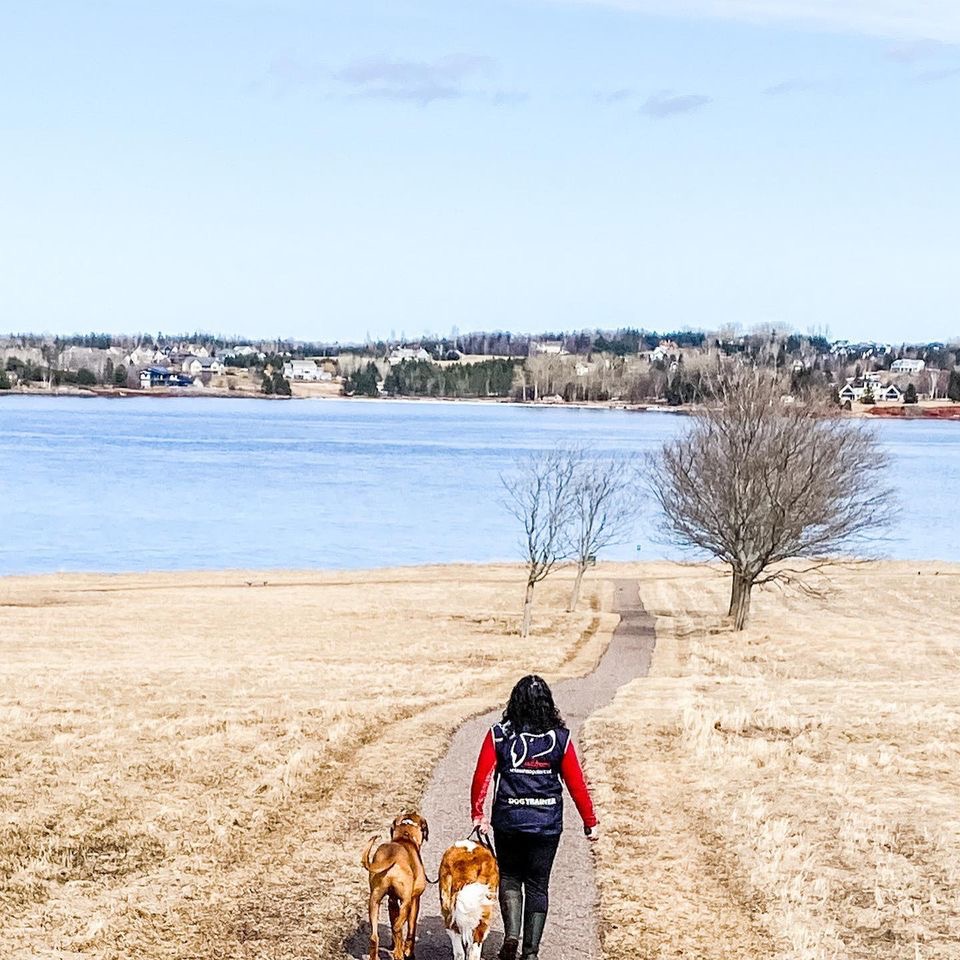
Dogs Walking

In this blog, I am going to teach you how to stop taking an all-or-nothing approach to dog training and give you lots of tips on how to find the time to train your dog!

So many people are living life with out-of-control dogs. Correction, they are not living, they are surviving. 

Maybe you got a puppy and were not properly prepared as puppies require A LOT of time and effort put into training or you can end up with major problem behaviors. (Check out our Puppy Management Class for help with training your pup!)

Maybe you got a rescue wanting to save it from further trauma and hardship and you were not prepared to deal with its reactivity, anxiety, or aggression towards people or dogs. 

Maybe you were taught to believe by the media that if you just spoil your dog with endless amounts of free love, affection, food, treats, toys, and snuggles that they will recognize all you do for them and reciprocate by never doing bad things. 

You realized you are out of your depth and contacted your local trainer and signed up for a training package. That’s an amazing first step!! You should feel good you did that! 

You knocked on the door of dog training and guess who answered. Work. Lol, yup! That’s what dog training is. Work. Anyone who seeks growth and transformation in their life needs to be prepared for work and dog training is no different. 

I have conversations with clients a lot, especially during the pandemic, that they are stressed, tired, burned out, overwhelmed with their hectic lives and all their duties and they struggle to add dog training to their list. We live in world now where you are expected to hustle 24/7, drop everything to deal with others emergencies and maintain peak performance in productivity while sacrificing your down time and self care. Moms definitely know what I mean!

No wonder clients struggle to make time to work with their dogs and end up falling behind on their training or quitting not long after they start. In my experience, some owners tend to be all or nothing about training. They feel in order to do it right you need to set aside hours of your day to spend with the dog. This leads to guilt, regret, feeling overwhelmed which will cause you to avoid and merge into comfort seeking habits while continuing the old habit of  just putting up with the dogs behaviour. 

I can be the same way sometimes! I get in my head on occasion that in order to see real change in my life, I need to have hours a day to spend focusing on it but who has that? This way of thinking can make training seem to be a very large project instead of simple small tasks to move the needle forward. You then tend to retreat into stalling until…the perfect day, the perfect time, the perfect weather when all the stars line up and you are free of stress. 

In my personal experience that never happens. Life will continually throw curve balls, people who need me will continually make demands of my time. What works well for me is to stop thinking of the “big project” and start thinking of small, measurable goals and tasks necessary to complete the big project. 

Coach Sara’s Tips: Creative Opportunities To Work On Your Dog Training Goals. 

Here are some ideas on how to find time to train your dog. I do these while I also manage:

  • A full time 50 plus hour week job teaching and coaching wonderful clients. 
  • An 80 minute a day commute to and from work.
  • Living with 1 to 2 board and trains in my care most of the year in addition to my own two dogs.
  • Being responsible for all my home/property maintenance on my own as I live alone. 

Dog Trainer

1. You don’t need to train for hours a day. Science shows that dogs learn best with several short training sessions. I train dogs 3 times a day for 2-5 minutes. I can train up to 5 times a day if I have the whole day off. With some planning and scheduling, you can find 15 mins to engage and work with your dog every day. It’s like going to the gym. You work one muscle group for short sets. Then you stop and let them rest and work in a different group. There’s leg day then back and shoulders day etc. Short sets move you along your goal to the higher level of strength and fitness you desire for your whole body. 

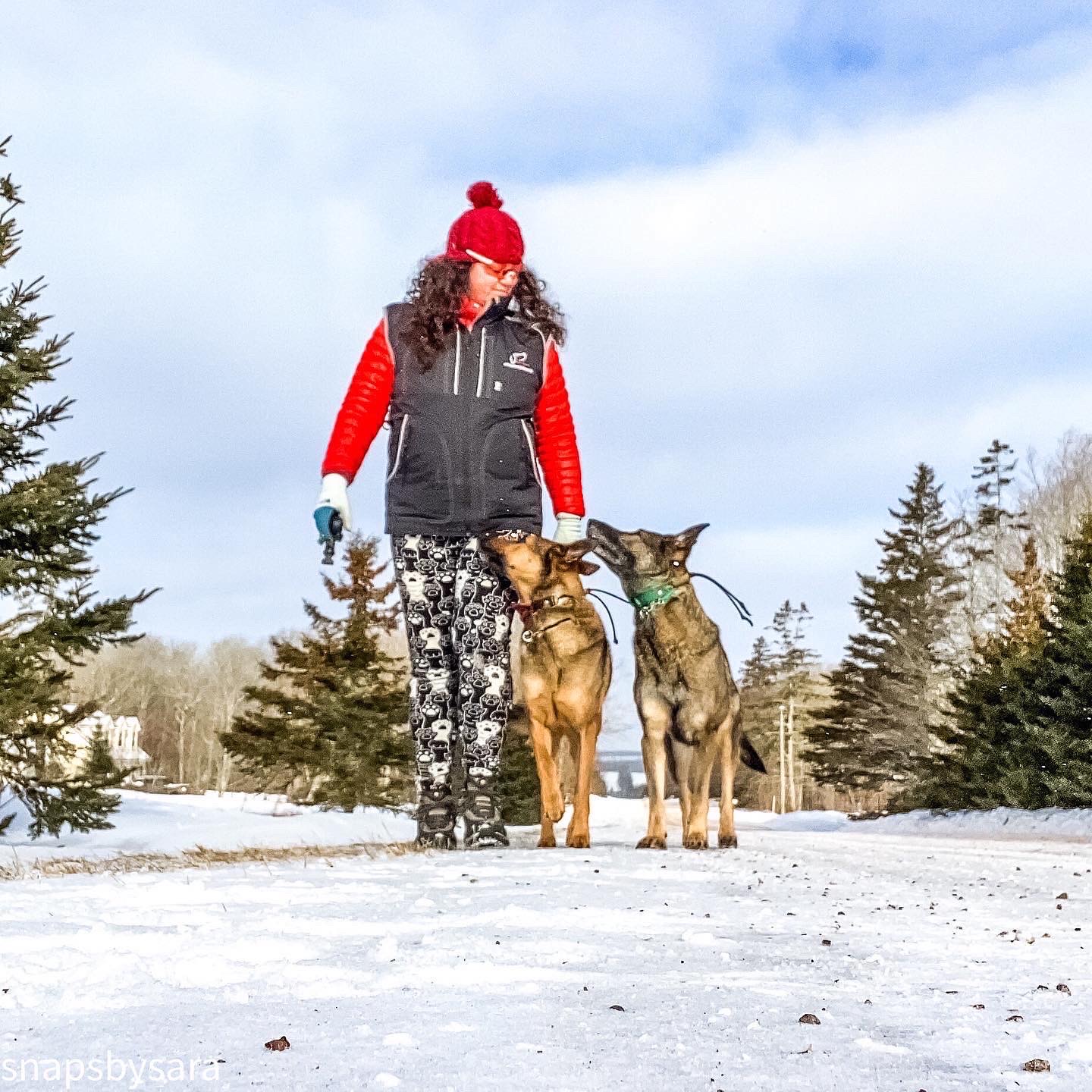
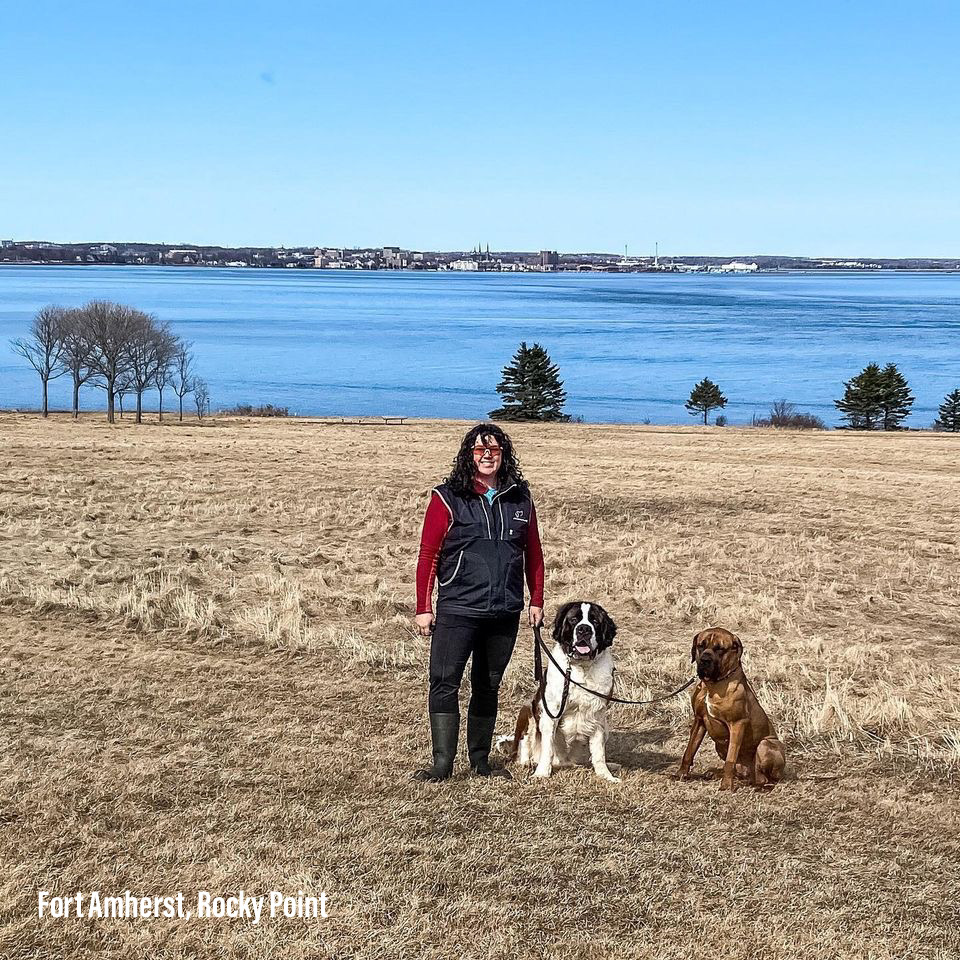
2. I’m a weekend warrior. On the weekends I take dogs on adventures all around PEI to play/train and be socialized in new environments or environments we don’t go to often. Point Prim, Fort Amherst, Green Park, Confederation Bridge Park are a few places we roadtrip to. During the workweek, I do training, walking, hiking and games at home, and close to home designed to use their body and brain to burn off energy quickly and satisfy them – yet suit my busy schedule. Think about where you could go within a 5-10 minute drive from home to hang out with you dog. 

Dog

3. Incorporate obedience into your fetch and tug games. Before you say fetch or cue them to attack the tug, ask them to do commands- sit! down! Fetch! Heel, Place! Fetch! Mix it up and never let them guess what you’re going to ask them to do next. This encourages deeper thinking and will tire them out faster if you have dogs that never seem to get tired mindlessly chasing the ball over and over. You will cut down your time needed greatly and this is stuff you can do right at home.

Here’s a video to help you 👇

https://youtu.be/4QK2hxGIUI0

4. Treadmill training. Train your dog to walk/trot on a treadmill and you will eventually be able to let them have fun burning off energy while you are doing something else. Don’t leave them alone on the treadmill though! Be in the room. I trained my dogs to use the treadmill this winter and they legit love it. Some breeds are not suited for long outings in the heat of summer or cold of winter so treadmills are great for them. Also perfect for clients with mobility issues. 

5. I know you feel guilty that your dog is home all day while you work but you have full control over what you choose to do with them before and after work. Set your alarm to get up minimum 10 mins earlier and now you’ve freed up time for a train/play session before you leave. Session #2 when you come home, session #3 before bed. 

6. If you are lucky enough to live with a partner or family then you have help with the dog training duties. (I have your back Mom’s! Make the spouse and kids help! This is not all on you!) Have a family meeting. Discuss why you decided to get the dog and why it’s important that you all work together to take care of them. Plan and delegate the daily tasks for the dog’s care. If you have small kids, you can work the leash/tools and give commands and the child can say “Break” and feed the dog. Put someone in charge of potty breaks, someone in charge of exercise, someone in charge of training. Then rotate the duties so the dog will learn to listen to everyone equally. Have a points system for all the duties and the family members can earn points towards prizes. 

Train Dogs

7. Potty break time can be training time. You have to take them out a few times a day or more to do their business. You are already geared up to be outside with them. Train them for 2-5 mins after they potty then go back inside. Or stay out and play. 

8. You can carve out more time than you think to keep the momentum going. Boiling water for pasta? Train the dog while you wait. Saucing up ribs on the BBQ? Train a dog, and brush the ribs. Scrolling around social media? Set alarms and allow yourself a set amount of time to scroll then go do something with your dog. (My screen time alarm says “Get off your ass and go do something!” Works!) Taking the garbage can out to the curb? Work on your dog’s heeling as you roll it out.

Here’s a video to help inspire you 👇

https://youtu.be/Ur4K9hQRoSM

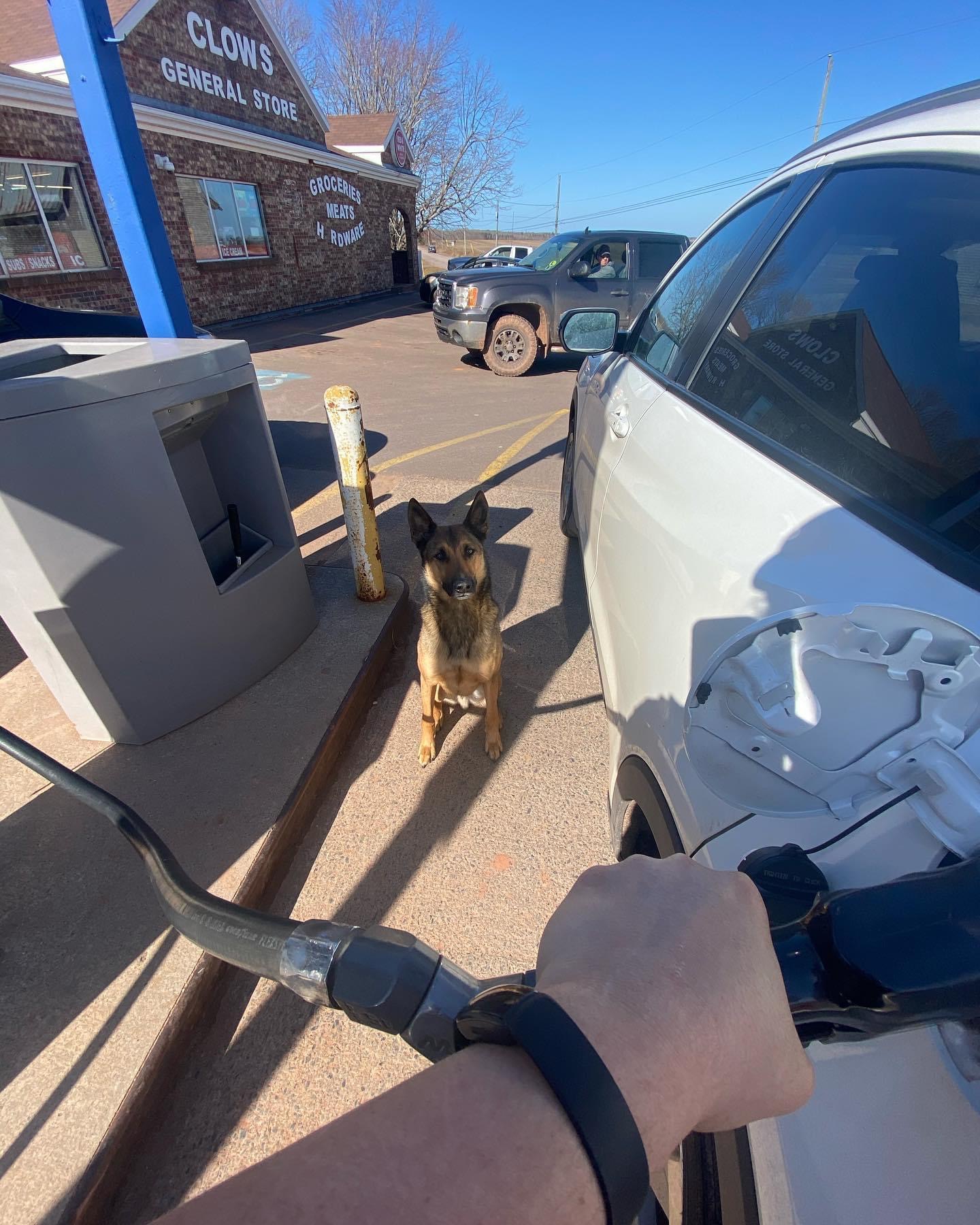
9. Take your dog with you when you go get gas. Choose a station that has the thingy that allows you to pump hands free. (Esso and Petro Canada in Charlottetown) You just created 2-3 mins you can get your dog out of the car on a leash and practice some sits, downs, place on the gas pump platform, and jump in and out of the car on command.

Dog Training

10.  I often slip to my local country general store for a few things. You can buy systems to monitor your car’s temperature when you’re not in it and a live stream to your phone for further monitoring. If you dont’ trust your dog loose in your car purchase a car kennel. I train dogs in the parking lot, go get my few things, train for another 2-5 mins if time and go home. Bam! 1-2 sessions done! 

11. My parents have me over for dinner sometimes. Bring the dogs and train/play out in their yard then they can hang in the garage while we visit. (No dogs allowed in their house as it’s a B&B) Can’t be trusted loose on their own? Put your car kennel in the garage. 

12.  Have errands to do at pet-friendly stores such as Canadian Tire, Home Depot, Kent, and Princess Auto? Bring your dog!

Find Time to Train Your Dog

13. Need dog food at your local pet store? Bring your dog and train them in the store before making your purchase. Dog reactive and don’t want to take them in? Just train in the parking lot then. 

All this continuous short-term exposure to different environments/situations will go a long long way towards helping you reach your goals.  Best of all, now that your dog is spending more quality time with you, your bond with them will deepen and their drive and willingness to pay attention will improve!

Want a Coach that will help you further in your dogs’ training and help you find time to train your dog? Book a Free Consult with me (Coach Sara) to get started! Click here to book now.


Dog Training

Find Time to Train Your Dog

Dogs

Follow along my dog training journey on Instagram where I also give you lots of ideas on how to find time to train your dog! Follow – @unleashedpotentialpei

________________________________________________________________

Click for Free Dog Training Videos

Looking for help with your dog’s training?

Sign-up for our Free Dog Training Mini-Series to get started!


Follow

Subscribe

Like

________________________________________________________________

Need help with your dog’s training but unsure of what service we offer is right for you?

Click here to explore all of our Dog Training Services

German Shepherds Training


Filed Under: Sara Bryanton, Uncategorized

Training Two German Shepherds

March 22, 2022 By Duke Ferguson Leave a Comment

Training two German Shepherds is a lot of work to take on but our client, Myles, was up for the challenge!

We are so proud of how far he and his two dogs have come! They worked so hard to get to where they are now and we love watching as they continue to make progress.

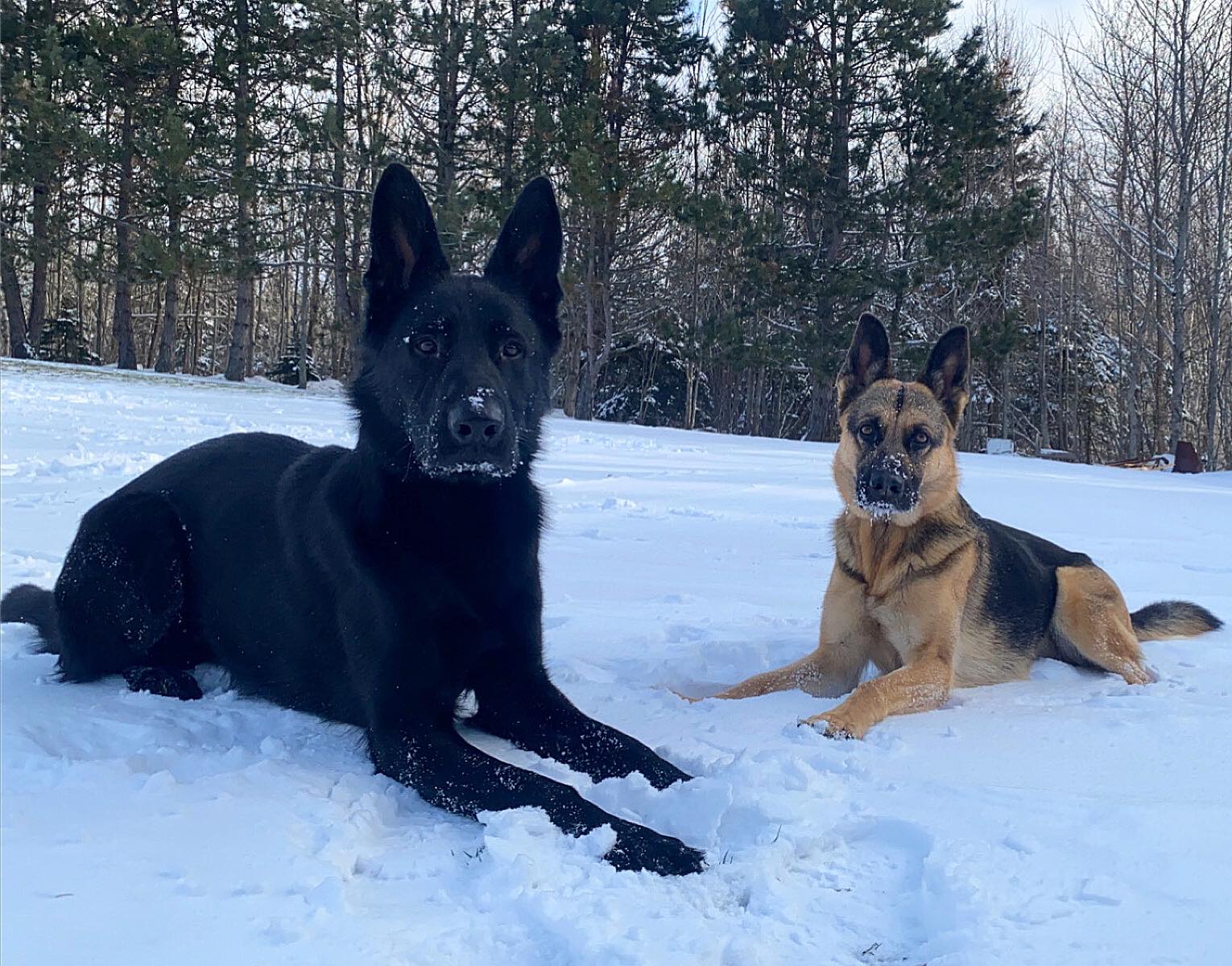
Two German Shepherds

*Duke (left), Roxy (right)*

“When I first got my German Shepherd, Roxy, a co-worker of mine mentioned Unleashed Potential. I was excited until I saw the pricing. It honestly scared me. My co-worker then explained the training to me and told me I wouldn’t regret it. She is a good friend so I took her word for it. She was right!

The training was great, as well as the staff. I enjoyed the training and staff so much that when I got my second Shepherd, Duke, I enrolled him in the puppy class for the basics and socialization which was major! Then, like my first dog, we went on to the Ultimate Obedience (off-leash training) with my new pup.

German Shepherd Puppy

*Pictured – Puppy Duke meets Trainer Duke*

Unleashed Potential treats you like family. To this day I am very close in contact with Sara and Duke. At one point, my training had come to a standstill between no motivation with the dogs and me working so much. UPK9 helped me revamp the spark with the dogs! We switched their food to a better brand for them (Hurraw) and the drive instantly went up and has stayed up ever since.

Long story short is I think UPK9 can help with any problem or training you need! It may be quick or it may take more time but be patient, trust the process, and make the training fun for you and the dog.”

-Owner Myles

Training Two German Shepherds

Training two German Shepherds is possible! Congrats Myles on your success!

You can follow along with their journey – @myles_outdoors


_______________________________________________________________

Click for Free Dog Training Videos

Looking for help with your dog’s training?

Sign-up for our Free Dog Training Mini-Series to get started!


Follow

Subscribe

Like

_______________________________________________________________

Need help with your dog’s training but unsure of what service we offer is right for you?

Click here to explore all of our Dog Training Services

German Shepherds Training


Filed Under: Testimonials

  • Page 1
  • Page 2
  • Page 3
  • Go to Next Page »

Footer

RSS The Weekly Recall with Duke Ferguson

  • #31 Repairing Trust When Communication Breaks Down
    What happens when communication falls apart and trust starts slipping away? In this episode of The Weekly Recall, Duke tackles one of the most common problems trainers and dog owners face. A breakdown in communication. The same thing that creates tension with dogs can also create conflict with clients, spouses, teams, and even ourselves. Duke […]

Home | Contact | Find a Dog Trainer | Dog Trainer School | Dog Training | Store | Blog | Privacy Policy


Follow Duke Ferguson on Facebook Follow Duke on YouTube Follow Duke on Instagram


Copyright © 2026 · All Rights Reserved

Unleashed Potential - Stratford, PE, C1B 2W2, Canada
Phone: (902) 367-3647 · Toll Free: (844) 364-3647

Hours of Operation:
Unleashed Potential Main Office:
Monday - Friday: 9am-4pm | Office closed on Saturdays & Sundays
Dog Training & Coaching - By appointment only