• Skip to main content
  • Skip to footer
Unleashed Potential
  • Classes
  • UPX
  • Board and Train
  • Day Train Program
  • Find a Trainer
    • Become A Trainer
  • The UPK9 Blog
  • Store

Puppy Training

PUPPY SOCIALIZATION | Building Confidence in Your Dog

March 4, 2022 By Duke Ferguson 2 Comments

A 5-Step Puppy Socialization Exercise to Build More Confidence in Your Dog!

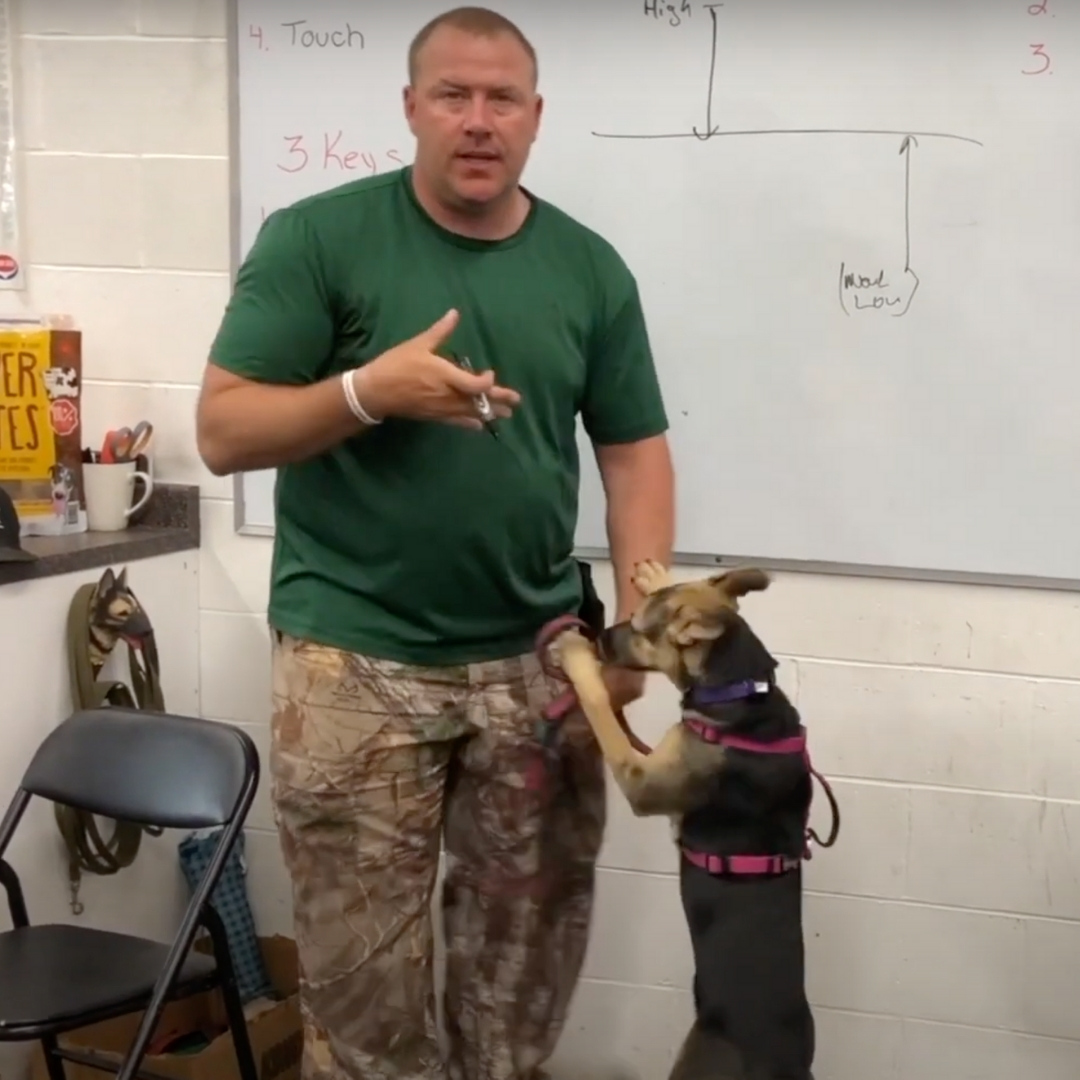
If you’re looking for ways to socialize and build confidence in your puppy or an older dog of any age, then this video is for you. Watch as I take you inside one of my private training sessions and introduce you to a very powerful, next-level socialization exercise that many quality working kennels will do with their dogs.  You’ll see a vibrant 16-week old pitbull puppy named Echo as she goes through all of the steps that I’m going to teach you.  This is the first time she will experience this form of socialization.

I’ll teach five levels that you can add on and keep the momentum going as your dog becomes more and more confident. This puppy socialization exercise is very simple and very fun. It is also an extremely powerful way to have your dog learn to try hard on its own and become more confident.


If you enjoyed this video, please Subscribe to our YouTube channel (P.S. Click the bell icon to get notifications when we post a new video).


Steps to Socialize Your Puppy
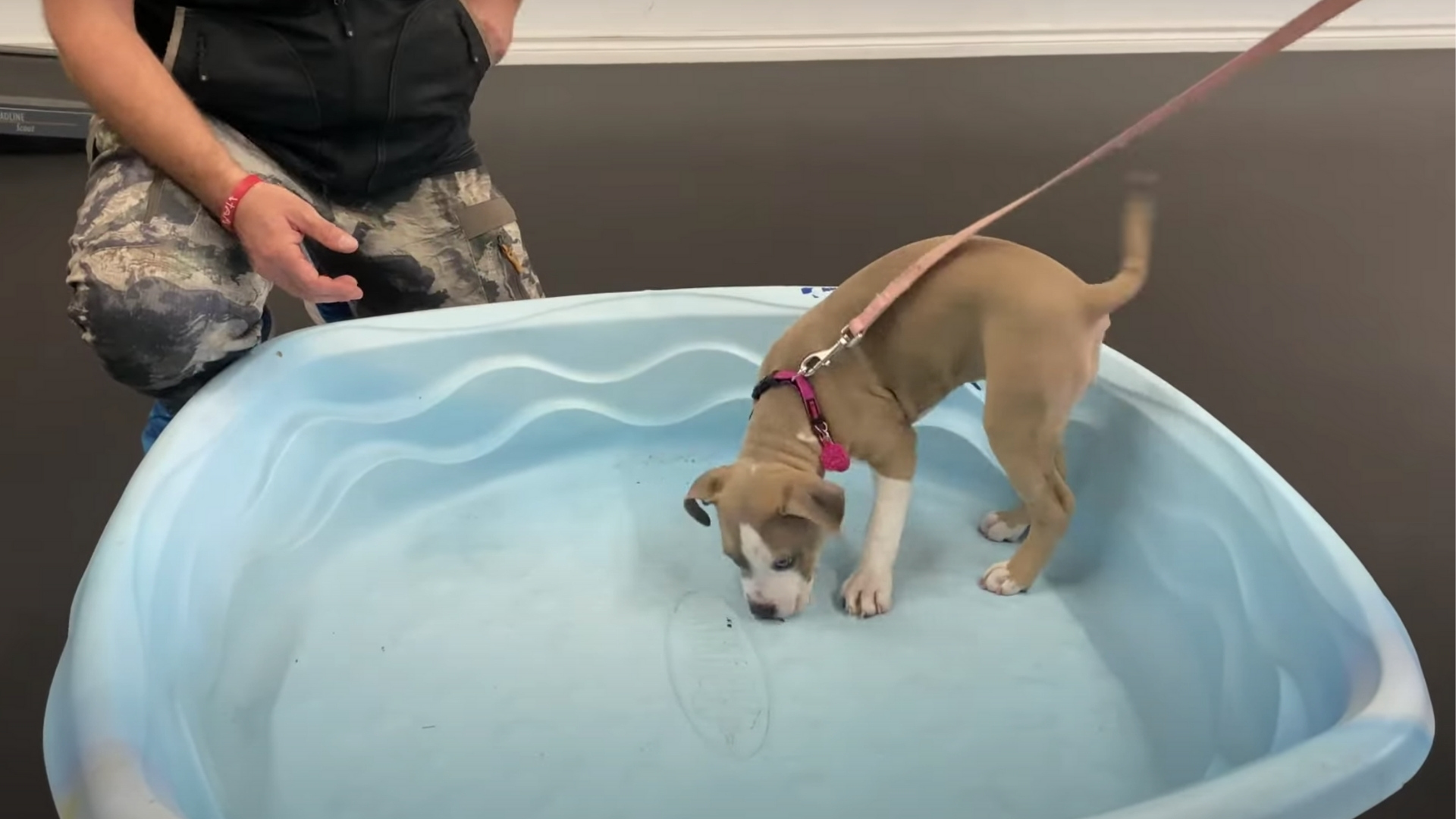
puppy in empty kiddie pool

Step 1:  Introduce the kiddie pool or something that can contain bottles or other safe objects.   The pool is empty at this point, you just want your puppy to experience the difference in texture and sound. We let the dog explore with a loose leash. Drop pieces of kibble or high-value treats in the pool as your dog is in it. Make it a great place to be!
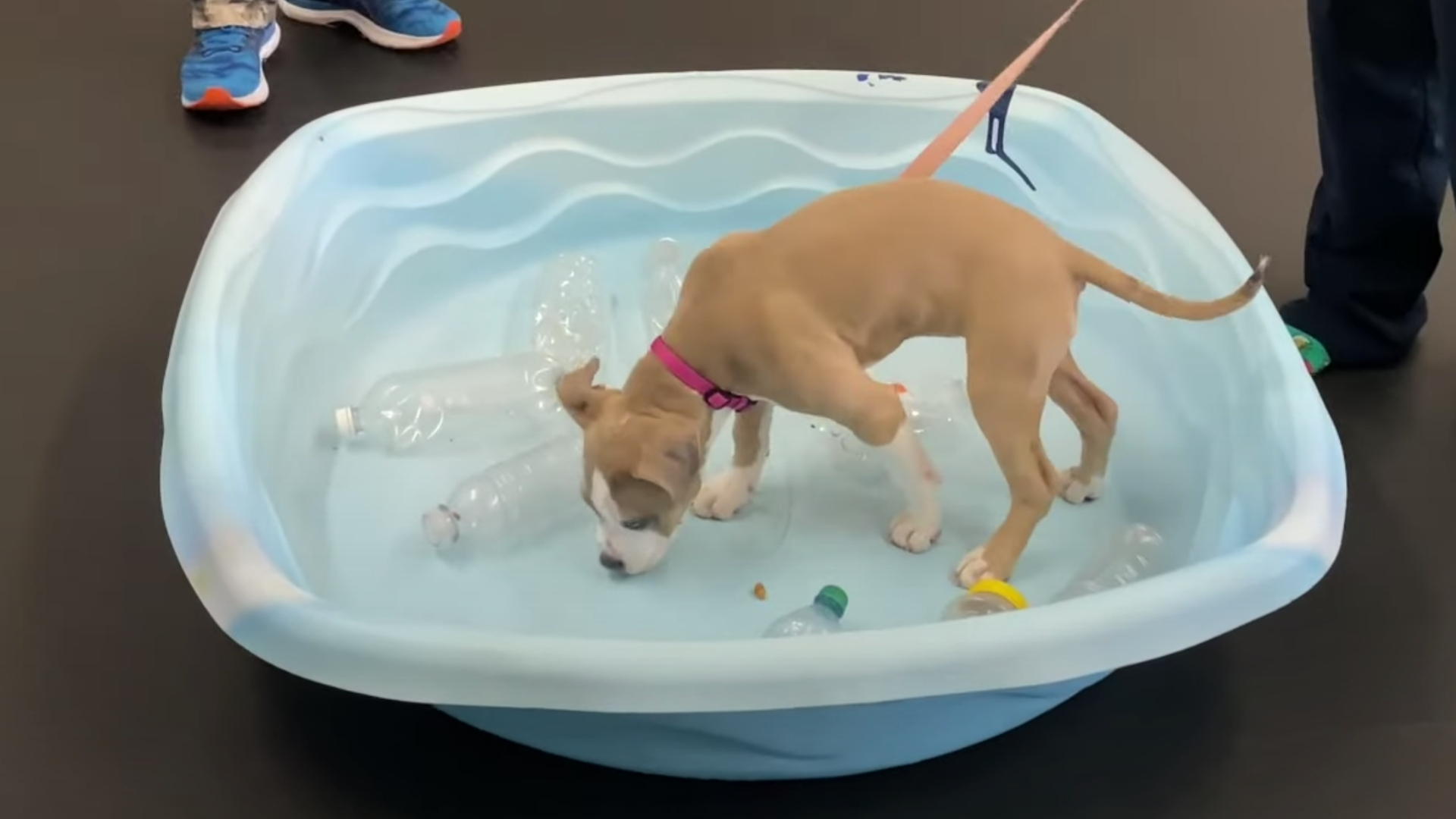
 

puppy and bottles in a kiddie pool

Step 2: Let your puppy jump out and add some empty water bottles to the pool making sure to leave lots of empty space.   As your dog jumps in, drop in more pieces of kibble, let your dog search around for the food. The sound of the moving bottles will be a different experience and this is part of socialization. The food is a reward and the dog learns to overcome the stress of the moving bottles.
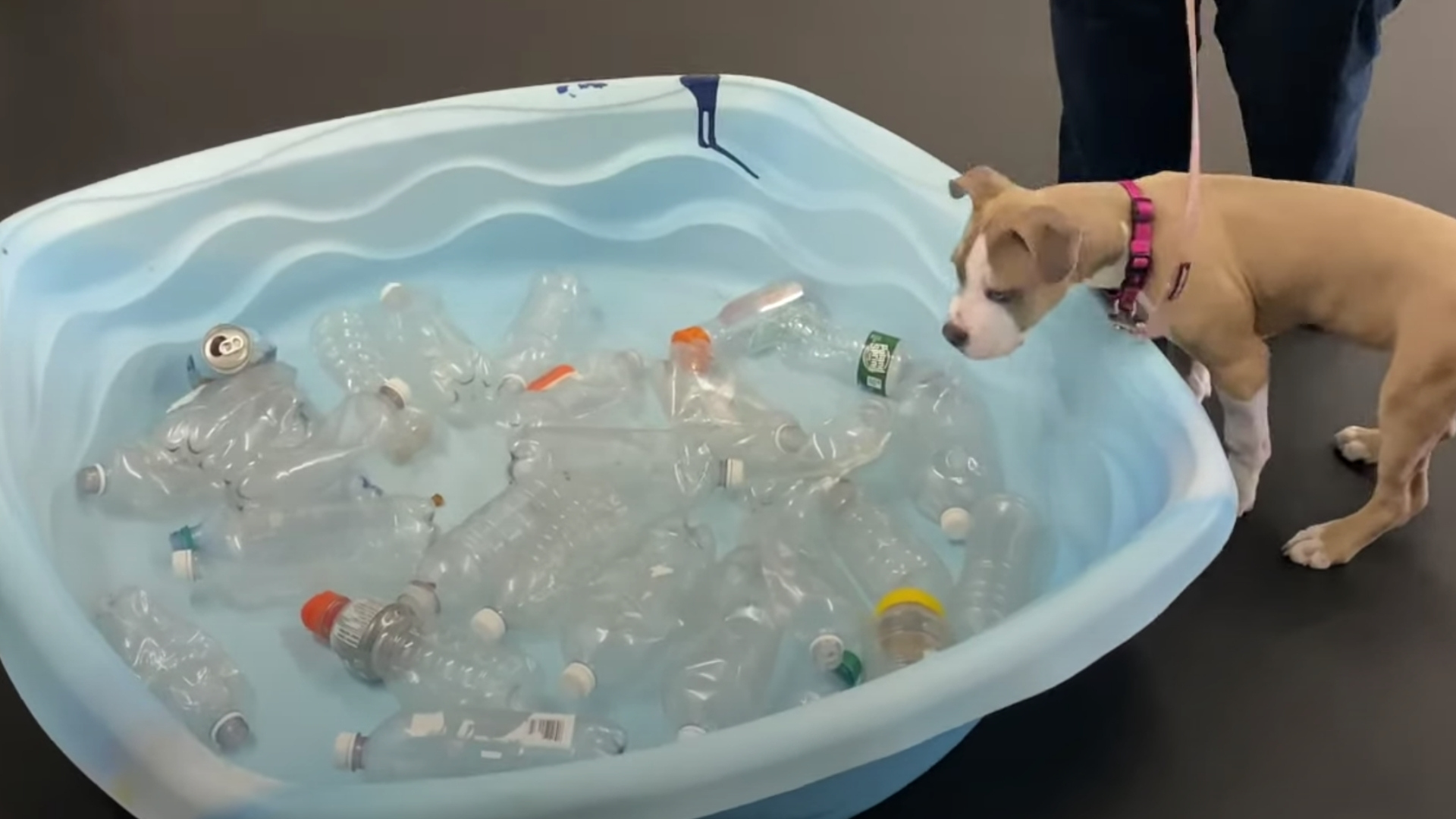
 

puppy about to enter bottle filled pool

Step 3:  Add even more water bottles to the pool.  Enough that the dog must push through some bottles in order to get the food.


Step 4:  As your dog is searching for food, tap the side of the pool to add some distraction and offer reassurance through some gentle petting and praise through touch. This helps build confidence because you as the handler are giving that support in this new environment.


Step 5:  The last step of this exercise to build confidence in your dog is to move around the bottles as they search for the food.  In this case, I’m using a stick to move around bottles and randomly tap the pool.  This is another form of distraction and it socializes the dog to all sorts of sounds, textures, and situations.


_________________________________________________________________


Recommended Products for This Exercise:


Training Clicker

Dog Treat Pouch


_________________________________________________________________


 Puppy Socialization should be fun!


Big Dog in Kid Pool

This can be done with older dogs too, it’s a great way to develop that trusting relationship between you and your dog.  It’s our hope that this video will help you think of other ways you can socialize your dog.  Get creative and remember always start off slowly and add another level as your dog is comfortable.  Use these exercises as an opportunity to train your dog using his kibble as a reward.  Throw that food dish away and get a treat pouch and feed your dog while you train!


 Tweet this video

twitter image


_________________________________________________________________

Would you like FREE  puppy training or dog training advice? OR to just learn more about Duke’s philosophy on dog training?

Contact us HERE

This mini-series is not found on YouTube.  Get Access Now  You will love it!
Free dog training videos

Filed Under: Duke Ferguson, UPK9 Main Blog

Prong Collar Training | The Loose Leash Walking Game

May 3, 2021 By Duke Ferguson 2 Comments

Prong Collar Training 

The Loose Leash Walking Game


Are you struggling to walk your dog on a loose leash? Are you unsure of prong collars and how to train with them?  If so…you’re in the right place!

In this YouTube video, I’m going to teach you how to use a prong collar (also known as a pinch collar) in a loose leash walking game!  This prong collar training will show you how to get your dog to stop pulling.  It can be a controversial training tool but when used correctly, the pinch collar is perfect for DIY dog training and structured walks.

While this tool is not for every circumstance, you can use the pinch collar to motivate response and reward the desired behaviour of paying attention to you and walking with a loose leash.


The prong collar can be used as another effective training tool for many dogs as it will stop leash pulling while you turn your walks into a loose leash walking game.  I will show you how to properly use a prong collar in a safe and even fun way. Your dog will actually enjoy the walk and won’t want to pull on a leash ever again with some training!  I do not suggest this tool be used on a very reactive aggressive dog as a first step OR young pups that don’t have a solid foundation with positive training first.

Learn how to make a game out of keeping a loose leash in this pinch collar training session.


Watch this training video on Prong Collar Training – The Loose Leash Walking Game

If you enjoyed this video, please Subscribe to our YouTube channel (P.S. Click the bell icon to get notifications when we post a new video).


When introduced properly, a pinch collar as a training tool can maintain that excited, happy attitude in your dog even while changing the behaviours by getting the dog to think.

For the least amount of stress, you must begin training in a controlled environment.  Over time, you can add more distractions, but I will tell you when you’re making him grow to be stronger, he’ll work through new stressors and become better.  Think of it this way, if we never experience any stress or pressure in our lives, and then all of a sudden there’s a bunch you won’t handle well, and you may even shut down.  We don’t that to happen in dog training.  That’s the problem with the pressure, but it’s not the tools…it’s the way we use them.


  • The prong collar (sometimes known as a pinch collar), evenly distributes the pressure all the way around the dog’s neck and it doesn’t choke. It’s not designed to choke.  For dogs that have a sensitive trachea, it’s actually good because it keeps the pressure away from the trachea.
  • When you put it on the dog, you’ll notice a ring stopper that stops this from going any tighter once it’s fit properly. So when you pull it, it can’t get it any tighter.  It is never designed to be tight all the time.


  • So we want this pinch collar to have a meaning we don’t want him to be numb to it where he pulls and doesn’t care, but we don’t want him to be nervous or scared or shut down by using it either.
  • If the leash is tight at even low levels for long, long periods of time; weeks and weeks he’ll get used to it and he will become desensitized.  You’ll make him tough to the collar and it won’t be as effective.


  • You’re going to do two things. You will be allowing pressure (from collar) and when the dog yields you’ll release the pressure.  So the concept is: “pressure and release.”


  • As soon as the dog turns away from the pressure and looks at you say, “BREAK” and move backward as you prepare to offer food reward.

  • As soon as the dog reaches you, pay him with a handful of food.  Ideally, this is a portion of his daily food allowance.  Build his food drive and use his food in training to create a happy, satisfied dog.


  • Now here’s the rule: When the pinch goes on to the dog, you must maintain a loose leash.


RECOMMENDED TOOLS

Herm SPRENGER Ultra-Plus Prong Dog Training Collar 


FOLLOW US!

facebook linkyoutube linkinstagram link


Would you like FREE  puppy training or dog training advice? OR to just learn more about Duke’s philosophy on dog training?

FREE TRAINING: mini-video series:  GET ACCESS HERE  

This mini-series is not found on YouTube.  Get Access Now  You will love it!

Contact us HERE

Filed Under: Duke Ferguson, UPK9 Main Blog

Vizsla Puppy Training | Teach Fetch

March 19, 2021 By Duke Ferguson 1 Comment

Vizsla Fetch Training – Teach ANY Puppy the Game of Fetch Using Food and Toys

This video will show you how to teach fetch using food and a toy with a vizsla puppy. If you’re looking for tips on how to easily train your puppy how to fetch and what you’ve been doing so far isn’t working, this video will show you a bunch of tips on how to successfully get your puppy to fetch!  For puppy training tips, watch this video and set the stage for an awesome retrieve!

If you enjoyed this video, please Subscribe to our YouTube channel (P.S. Click the bell icon to get notifications when we post a new video).

SUMMARY

  • The reason I use food, in the beginning, is that not all puppies or dogs have the drive to play (prey drive) and therefore, we have to ignite that and channel it.
  • When the dog’s mindset changes we can channel that play to toys in correlation with food.
  • Socialize your puppy using food and touch.
  • It’s easy to transition from food to a toy by throwing the toy and when as he’s coming back to you walk backwards, kneel down and reel him in like a fish and pay him with food.
  • To get your puppy to let things go, don’t pull it from him, instead hold the item and make it ‘go dead’.  As soon as he lets it go, you can play again.  He learns, “by letting go, play happens.”
  • Once your puppy or dog learns to fetch items you can then incorporate obedience fetch.  This is where the dog must think and do something for the fetch game to happen.
  • Obedience fetch works both the mind and the body.

VIZSLA PUPPY TRAINING | STEPS FOR A SUCCESSFUL FETCH

using food to build drive


arousing the puppy into prey drive


puppy goes out to fetch the toy


puppy retrieves toy to hand


Would you like FREE  puppy training or dog training advice? OR to just learn more about Duke’s philosophy on dog training?  GET ACCESS HERE to his exclusive, FREE mini-video series.  This mini-series is not found on YouTube… Get Access Now… You will love it!
Contact us HERE


RECOMMENDED TOOLS:

Liver Bites - Dog Treats
Liver Bites – We use these every day in training 🙂


FOLLOW US!

facebook link youtube link instagram link


Full Transcript – 

Vizsla Puppy Training | Teach Fetch Using Food and Toys

[The following is the full transcript of this YouTube video. Please note that this video, features Duke speaking extemporaneously–he is unscripted and unedited. Filmed in one take].


Hey there, it’s Duke Ferguson. How would you like your puppy to go out, grab something, and bring it back to you? If you want to learn how to do that…In this video, I’m going to teach you hands-on a little Vizsla puppy. Awesome little guy. I’m going to show you exactly how to get it done successfully with your dog. Be sure to watch the video the whole way through, because it’s jam-packed full of tips. In fact, grab a pen and a piece of paper. You’ll learn little things on socialization, how to get your puppy to let things go, how to get calm grips. And you’re going to see if you watch all the way through a mistake that I made you won’t see it. But I point it out at the end because I noticed it. And I want you to get the most out of this video, what you won’t do.

You’ll get to see that in the video because it’s really easy to not see. If you like this video help me help you click the notification, click the little light, thumbs up, all that cool stuff so that when a video drops, you’ll be the first to know. We have a little puppy. And despite all of the drills we can do, right, I’m going to actually, this guy has got drive. He’s got heart, he’s got everything I’d want to see, look at this. And come right in here too. So I have this desire, right? For food. And he’s got prey drive as well. He’s going to chase stuff and he wants to do things, but some dogs don’t. So in the very beginning, I want a dog to run away and come back. So I play a game.

All right. And the reason I use food first is because not all puppies are not all dogs have drive the drive to play or prey drive. And we have to kind of ignite that and channel it. Even if a dog has very little to no desire to play, we can use food in the beginning and start the play process. And as the dog’s mindset changes and the way they think and the way they feel about it, we can channel that play to toys in correlation with the food. So then all of a sudden with dating, we could call it or with these interactions in a good way, especially when it’s survival and when it’s all good things, but he learns to play. Now, what is play? Play is with toys. It’s interactive with us, but his type of play is wanting to bite and bite.

Even if a dog has very little to no desire to play, we can use food in the beginning and start the play process.

That’s a normal puppy. So one of the things I like to teach for the majority of dogs, especially with a hunting dog, I don’t want to play tug of war with a hunting dog, right? Fetch. I’m telling you to fetch. If you have a dog who has the desire to want to go and get it, I can have him run after the food, tell him to fetch. And he comes back to me and I’m already socializing him to come through here, he’s already standing. And Darren, you can do this as well for, with him, right? But if a dog is engaged with the food, he can’t bite you. So now I’m not getting bit. So this is all part of socialization. You’ve got a big, scary guy leaning over a dog. All right. He learns to do these things. He’s getting a ton of…break, and I can just throw it. Now,

where does this have to do with retrieval? He comes back, well, you need a dog to go away and you need a dog to come back. He’s learning to go after this. Let’s say, and you wouldn’t have to do this. If you had a dog with prey drive, I would start this with any dog. Um, regardless, but the dog that doesn’t like the toys, this is definitely your start. So you just throw it out. Okay. They have their marks established. What do they do when they want the food? They come back to you. So you’re already actually priming a recall. The dog comes. Simple. I’ve done nothing but talk. So, once I do the food and I know I don’t need to with him, okay, I’ll go with a little toy. Right? And I want to teach him to fetch something. So the first thing you need to do, right?

And especially, listen. If your dog is grabbing things for your attention and chasing you or getting you to chase them around, you know, and doing things, you’re already training them to do that. So I’m going to get his attention. He’s aroused. You see where he wants this and I’m going to throw it and I’m going to get the lead and I’m going to walk backwards and I’m going to kneel down and I’m going to reel him in like a little fish. Look at him. Hey, okay. Good job, buddy. Good job. And if he wants to hold on to that, come on, right in here. I’m letting him you can hold onto that little buddy. And then just calm. And then I just hold the toy and I wait, I let it go dead. I make it go dead. I just bring it in see. He wants to play on it.

Good. And then we’ll play again. As soon as he lets go. Okay, I’m going to start teasing them again a little bit. And I’m going to just throw it now. Why? I didn’t say fetch. Good boy. Hey, look at this right to me. Okay. That’s natural. Okay. I’m holding him there. And this is learning to go get something and bring it back to Duke. And, Oh my gosh. I get paid. If that guy had his treat pouch on and could feed me here. So he learns, especially if your dog likes it, I like to play to chase this. I like to pick it up and bring it back. That’s a God sent. If you have a dog like that, the thing is, what if they don’t you shape it the same way. So if your dog doesn’t like it, which he does, but for example, I throw it.

The puppy is learning to go get something and bring it back to Duke. And… oh my gosh. I get paid!

I know, he goes and he gets it. I have the leash and I’m going backwards because I want him to come and follow me or chase me. And I put my hand out already to get it from him. Right. Usually, it’s the left hand. And then I’m going to say what a good boy you are. Thank you. And I’m going to give them a piece of food. Do I have to give him the food? No, but it’s double reward probably more than double reward. Cause I tease him here. He’s aroused. He’s like, Hey, but this is a dog that likes to bite your pant legs and hump you and do things, which is a normal, strong little puppy. Okay. Fetch. Now, why did I say fetch? Because I know without reasonable doubt, that thought was going to go get it. Guaranteed. Good job, man.

And then I bring him in and I just let him hold it. I don’t take it right away. Good job. Way to go. Okay. And he lets it out on his own. He spits it out on his own. If I want them to have good grips. Fetch. I’ll build that. Him, I don’t care he’s soft grips. Just don’t let it go. So notice I’m pulling him in and he’s trying to go that way. That’s where I go the other way. Hey buddy. Hey buddy. Let’s go. And the reason why this works, obviously he has to come with me with the leash, but in the beginning, I threw food. He came back, I threw food. He came back. Now I throw good job, buddy. I throw this…little throw and he comes back. Right. He tries. And if he wants to run away and I’ll let that happen right now.

But I would say two fetches ago. Yeah. Is a good time to end this session. I’m a little bit long now. Cause he started going to go the other way. He was successful. Always end on success, where he wins and you win. You got what you wanted and when he wants one more fetch, stop it, only do one or two. I know I did a lot more for this, um, this video two or three fetches. And then when the dog says, yeah, I want one more. And then they got a lot of energy four fetches, five fetches. Now when you have a fetch game and they like it you’re burning off physical energy. The next thing I want you to do is to incorporate obedience training, which meaning thinking dog. Your terminology for obedience might be different than mine, but obedience training, meaning the dog says, I want the ball.

Now when you have a fetch game and they like it you’re burning off physical energy.

I want the retrieve, but I don’t want my dog senselessly, just running back and forth to become an athlete and still reactive. So I just wait and they do something. They sit, they lay down and they pay attention and I release them. “Break” and I give them a reward which you’ll see in other videos, but that’s called obedience fetch. The best thing you can do for your dog relationship burning off energy and everything. Hey, I hope you found this video of value. If you did, let me know your biggest takeaway down below. If you’d like to sign up for my free mini-course, there are six videos you can sign up for in the link down here. And if you’d like to learn more about obedience fetch kind of get the concept. I have a video right here and you can click that into that as well. So I hope that’s great. Thanks for watching. Make sure you subscribe, click the like and do all that cool stuff so that I can connect with you again. See you soon.

Filed Under: Duke Ferguson, UPK9 Main Blog

How to CALM a HYPER Puppy OR Excite a Lazy Dog Using FOOD

March 7, 2021 By Duke Ferguson 2 Comments

Watch This Video and Learn How to CALM a HYPER Puppy OR Excite a Lazy Dog Using FOOD


If you enjoyed this video, please Subscribe to our YouTube channel (P.S. Click the bell icon to get notifications when we post a new video).

Do you have a pushy dog, a hyper puppy, or a dog that likes to jump all over you?  Does your dog lack focus, not listen or pay attention?  If so, then this video is for you!

Two Powerful Ways to Use Food in Training

Learn How to CALM a HYPER Puppy using food.  In this video, I’m going to teach you how to take the hyper, pushy dog and get him to calm down and start using his brain. And I’m going to do that with food and the least amount of punishment possible.   You’re going to see me doing not much at all, I’ll be sitting while training and I’m going to use food as a distraction.  So, not only am I going to be getting this hyper dog to start thinking and to start doing alternate behaviors to get what he wants, but I’m going to be distracting the dog with food at the same time.  You’ll learn the whole process of how you can use food to actually calm a dog down!  I’ll also so you how you can use food to get a dog more jacked up and excited.

The main purpose of this video is to show you there are multiple uses of food.  I think you’re really going to enjoy it; especially if you have a hyper puppy or even a lazy dog.

This post may contain affiliate links.

Jumpy, Hyper Puppy – Before Our Training Session

jumpy hyper puppy

SUMMARY

How to CALM a HYPER Puppy Using Food OR Excite a Lazy Dog Using Food.

  • A lot of  people, including dog trainers say “I don’t use food in training because it makes the dog too crazy.”  This is a common misconception.  When food is used properly you can actually calm a dog down and even create a thinking dog.
  • The weak dog with a low drive must become pushier to eat and the high drive, the pushy dog must calm down to eat.  Nature teaches us this.  Puppies learn quickly that in order to eat, they must have become pushy enough to get a spot to nurse amongst the littermates. If it’s too aggressive and bites mom’s nipples, she’s going to correct that behaviour.  If a puppy is weak and unmotivated there will be no food.
  • How do you calm a dog down using food?  Make him think!
  • The dog must learn: Ignore the reward to get the reward.  What I look for is behaviour; the dog must ignore the food in my hand and look into my eyes to get the food.  Offer predictable “room service” and feed the dog for the desired behaviour of sitting and being calm.  This is referred to as a direct reward.
  • Why are dogs pushy and jumpy? It’s because you reinforce it by making a game of it by pushing them down.
  • It’s better to train a dog that is thinking not just reacting.
  • This training is not a quick fix method but it will develop a solid, strong behaviour while still maintaining a good, solid, happy dog.

Attention and Focus After 6 Minutes of Training

Calm dog paying attention


The Liver Bites I use and train with every day.  Freeze-dried, all-natural liver bites with no preservatives.

treats to train the hyper puppy


Treat pouch to train the hyper puppy
Unleashed Potential K9 Training Pouch


Would you like FREE  puppy training or dog training advice? OR to just learn more about Duke’s philosophy on dog training?  GET ACCESS HERE to his exclusive, FREE mini-video series.  This mini-series is not found on YouTube… Get Access Now… You will love it!

Contact us HERE

FOLLOW US!


Full Transcript-

How to CALM a HYPER Puppy Using Food OR Excite a Lazy Dog Using FOOD

[The following is the full transcript of this YouTube video. Please note that this video, features Duke speaking extemporaneously–he is unscripted and unedited. Filmed in one take].

Hey everybody, it’s Duke Ferguson, owner, CEO, and master trainer of Unleashed potential K9 and creator of Dog Training Genesis. If you have a pushy dog, a hyper dog, a dog that likes to jump all over you and steal things and not focus and not pay attention and not listen – just outright crazy. Then this video is for you! In this video, I’m going to teach you how to take that type of dog and get them to start thinking using the brain. And I’m gonna use that with food and the least amount of punishment possible. And while you watch, you’re going to see me doing not very much at all, talking to the camera and the food I’m going to use as a distraction. So not only am I going to be getting this hyper dog to start thinking and to start doing alternate behaviours, to get what they want, but I’m going to be distracting the dog with food at the same time. And I’m going to explain to you the whole process of how you can use food to actually calm a dog down. And I’ll actually explain how you can use food to get a dog more jacked up and excited. The main purpose of this video is just to show you there are multiple uses of food. And I think you’re really going to enjoy it, especially if you have one of those dogs. Alright, see in the video.

So a lot of trainers, and a lot of people, not just trainers and people may say, “I don’t use food because it makes them too crazy”. Right. And you must understand, actually, can you come over here? And we’re going to flip around for a sec for the board.

Using food. Okay. Do you have a high dog? Not a pot high but a strong pushy food-drive And this is the balanced line that you want of a medium, like level-headed or even a weak dog, right? Uh, just kind of like a low, weak, uh, this weak dog must become pushier to eat. The high crazy nutbar needs to calm down and use their brain to eat. This isn’t “bro” science. This is mother nature. If this dog comes rambunctiously in there at the little puppy age, bites mommy’s nipples. She’s going to tell him, hey, you’re not eating today. If the little one is too weak, doesn’t get in there. Maybe there’s how many nipples and how many puppies you don’t eat today ’cause you weren’t pushy enough. Does it make sense? And food works for this and works for this but some people are like, no, it makes them too hectic this dog wants food, right?

It’s begging for food. And people say, Oh, never reward begging behaviour. bull, I say reward begging don’t reward this. So what I need to do, I can do lots of stuff. Most people are going to ask, how do you correct that? How do you punish it? And you could, you can do kinds of things. It’s a nine-month-old dog, so you can do that it’s not a puppy actually. So, you see, we teach certain things. So I’m going to just try something, for example, bring him some food, right. And I’ll amp the dog up. It’s not hard. That’s what the dogs learn. But that’s a drive, and a lot of people say, how do I friggin calm him down? Right. Okay. Make him think. So he’s already kind of had a little process of thinking just with my free videos. So if I sit here and I have the food. I can make him calmer by making him think, okay. Now I can either let him do this and be pushy, pushy, pushy, pushy, pushy. Right? And he learns being pushy I’ll starve to death. So he thinks, how do I get the food, but I’m not going to let him starve to death in a sense, but he will if he’s not paying attention, this is not paying attention. This is going by all the reinforcement that he’s had. And he’s learned to do this, to get what he wants. Now, the other thing I can do is I can do what’s called negative punishment. What’s an evil thing, right? Which I just don’t pull away. Bring it back.

I can make him calmer by making him think

Until he’s calmer. If he paws at the hand, I pull it away. And I come back. What I do look for is behaviour. I want you to look into my eyes, look at him, he so focused on food, how am I going to look in my eyes? Right? This might take a while, but this dog, he’s never had any training ever in a sense. High food drive builds up. Maybe he sits there and calms down. Maybe I don’t get him so that he’s calmer. Did you see that? Break! See he looked into my eyes. I don’t have to do anything. Lazy dog training, positive training is lazy dog training. He lays down, “Break”. Get him to think, how do I get the food? Do I jump to get the food? No, I won’t go hungry by being pushy, pushy to get the food. No! So when he does that, look, he’s already learning

I’m not doing anything. I’m talking to the camera. I don’t have to punish him. If he jumped on me, I could stand up and say, don’t touch me.  So let’s do something a little deeper. This is deeper practice. Now his freaking brain is working. I’m not luring nobody needs to do that cheerleading crap. He’s all over me and I say “hey” That’s a little bit better. Nice and calm. There’s your food. There it is there. What are you going to do to get it? He’s already starting to lay down. I want him to look into my eyes. So he’s exploring options. Why are they pushy? Why are they jumpy? Because you reinforce it by pushing them down and playing games. I’m going to reward this since he’s calm. “Break” He’s calm, you see that part? his mind was thinking. I’ll up the criteria later. So you still got that emotion so that every other day that goes by. “break” Dog uses his brain and gets smart. Do nothing.

Why are they pushy? Why are they jumpy? Because you reinforce it by pushing them down and playing games.

So just sit there and do nothing. Sometimes, you get the patience to do it. I want eye contact. I don’t care if he sits or down, I want eye contact. I’m going to get them all amped up again. Right? Just to see it. See how people could be. It gets worse. If he stays crazy long-term this is what he’s used to doing. Give me that, give me that, and he gets what he wants for the most part he’s right in there. Right? Pushing. And like I said, pulling away is negative punishment. Butt on the ground gives food. Paws – pulls things away. When you go for it, you push it away. When your ass is on the ground, it comes to you. It’s just a hot coal game. Okay? So I am doing a little bit of activity saying break and releasing him. And that actually keeps them active and high sometimes. If I want him super calm, if I want him just to sit there and be calm, I will give room service, which is a direct reward. Alright?

We’ll get him to do a sit or down and then I’ll show you what I mean by direct reward. This is predictable. It will be predictable. Every time I use it to get to that safe, predictable reward will calm him down because he knows. I’m not creating a break in the activity. I want to happy high drive dog. I want a dog thinking, look he’s not jumping on me anymore. I want to throw it and have him come back for it. I just liked the activity with the dogs.

So feed, feed. “Good” means stay in behaviour. You don’t have to use that word. A lot of people are like, Oh, you’re just baiting the dog. I just want to be calm. So just pause for now. As I talk to you, let’s be calm. I’d rather that than getting raked (clawed), know good Lord. See how he’s coming around and I’ve got the food right there and he’s not even jumping for it anymore. And he’ll forget. I don’t care if he moves, I didn’t tell him to lay down. I didn’t tell him to sit. I want him to calm down and I have food. I have high-value food. Watch, I’m going to actually.  I’m going to get him going because I want him to learn every time I get crazy

I’m not asking for obedience. I’m asking to use his brain, that’s it. Negative punishment. Right there folks. if you think punishment is bad, oh, poor boy.  I don’t ask for obedience. I’m asking for him to use his brain. He’s not jumping on me anymore. Isn’t that funny? Here’s food. Here and here, and this side and this side. It’s crazy.

I’m not asking for obedience. I’m asking him to use his brain, that’s it.

Notice the pushiness is less and the wheels are turning, “Good” Predictable, direct room service calms him down. Now I’m going to do some active training. Okay, to tire him out. I’m not going to step on the leash. Now, does that make sense? Jumping on it comes back to me. Now I can start training a recall if I want to. He’s now, sees, me I like to train a dog that’s actually thinking, not just reacting. I’ll react to the dog. He thinks he’s the one in control. He’s not. “Break” And that’s the release that will keep him a little stimulated, that keeps them happy. That builds dopamine and builds a love for the behaviour. So if you want a calm dog – room service – predictable, for now. You don’t do this constantly forever. He’s going to learn to be calm. You might have to give high rates of reinforcement or else if you are too slow he will mess up like that.

Me, I like to train a dog that’s actually thinking, not just reacting. I’ll react to the dog. He thinks he’s the one in control. He’s not.

High rates, high rates, then – slow it down. Instead of every second, every two seconds, then every three seconds and every four seconds. See that? Pulling away for Sarah but the only way you eat today or tomorrow. Get his attention. He’s crazy, I love it! Just make sense. The leash is only there so he can’t get away. I just made my fish tank smaller. See this harness? Throw the thing away! That’s why he pulls like crazy on the leash. When he hit the end of the leash there with something on the neck it will give him a little bonk and gets him back to me and smartens him up to pay attention. Now I can start training him to think do whatever I want. I’m actually not training him in any obedience, I’m not giving any commands, I’m just saying use your brain. “Break” He looks in my eyes. There’s food here. If he goes after it, he doesn’t eat, he sits and thinks he looks at my eyes. Here’s the thing. Ignore reward, think about something. Do, to get the reward. Ignore reward in order to get the reward. I don’t lure a lot, you know, I lure a little bit when I need to but it’s not needed. Simple.

Ignore reward in order to get the reward.  That’s how you calm a hyper puppy using food.

Okay. I hope you enjoyed this video as much as I enjoyed making it for you. And I hope you can take something that’s relevant out of there, a nugget or two, just replay the video if you want to and start applying that to your dog right away, you will see the dog start to think and the dogs start to respond. Provided you’ve got, I’m going to give you some three extra tips here provided you have three keys that are really important and your training, your timing’s gotta be good. You gotta be very consistent in a lifestyle with this, how you live with your dog trains your dog and the dog needs to be motivated to care. It needs to be motivated by what you have. Okay. Now you don’t have to distract your dog as I did in the video. I just want to show you an example.


This video is not a quick fix method. Okay. But I do find that it is rooted really deep in getting a really solid, strong behaviour and still maintaining a good, solid, happy, positive attitude with your dog. And it’s less risky. Okay. There are other methods that I can apply and show you. And I will do it in other videos of how you might be able to do this a little bit quicker, but this one, this one’s hard to screw up and it’s really tough to cause problems in your training if you will. All right. So thank you for watching. And if you’re looking for a trainer to help you with your dog an Unleashed Potential trainer or trainer you can trust, just check out our website unleashedpotential.ca I have trainers in Canada, in the United States. And we would love to help you. If there’s no trainer, Unleashed Potential trainer in your area.


I also have an online dog training program that start to finish it’s for puppies it’s for any type of dog, with really any kind of issues, because all of the recipe of what I teach the methodologies, the foundation is the most important thing that you need to know to get success. Everything else, once you get your dog thinking a certain way in a certain state of mind, everything else is super easy. So for your convenience, what I’m going to do is I’m going to put all of the links below in the description box. So you just check out the description box, check out a link that you want to go to. And it’s all there for your convenience to get more help if you need more help and you want to go further. If you haven’t subscribed to our channel, yet, we’re going to be putting out more and more. It was this year and I don’t want you to miss out. It’s going to be a lot of teaching, a lot of education this year, more than ever before. And what I would urge you to do now is click on your notifications and subscribe to our channel. Give us a thumbs up. And if you know anybody who has a pushy dog or a dog that they need help with, feel free to share this video. As always, thanks for watching. And I’ll see you in the next video.

Filed Under: Duke Ferguson, UPK9 Main Blog

Black Lab Puppy Training | 14 Week Old Koal | Vlog #1

September 20, 2020 By Duke Ferguson Leave a Comment

SUMMARY 

Black Lab Puppy Training | 14 Week Old Koal | Vlog #1

  • Welcome, 14 week-old black lab Koal to Unleashed Potential’s puppy training.  Koal is going to be a future hunting dog and we are going to invest the time and work with him to be an amazing pet and retrieval dog.
  • So what I’m going to do first here with Koal is establish a nice little relationship. I’m going to teach this little black lab a clear communication system.  I’m going to teach him how to think and how to put out or “try” and work.  He’s going to be a thinking dog!black lab puppy training
  • In this video, I’ll teach how to charge the release mark for clear communication in this puppy training. I’m going to condition Koal to a verbal mark and a clicker which is a complete release.  When I say the word “break”, or I click the clicker I’m just charging or establishing what that actually means.  And what does it mean? It means you just did exactly what I wanted. You’re free. Here’s a paycheck.
  • Socialization is key in everything that we’re going to do.  So with Koal, he is going to be working for his meals; meaning existential food training. He’ll be working for his retrieves, he’ll be working for everything and he’s going to love life!
  • If I want a dog to go to something like an elevated place, I can put the food on the surface and let him think about how to get on there. I’ll show him the food on the surface “place” and wait.

puppy training - direct reward

  • When he jumps up there, I would mark it. He would get a direct reward (the food).   A direct reward is to help him there. After he’s comfortable with that I will no longer do that.  I will stand here and he has to learn…hey…I need to get on there to make the food come. When he does, I’ll mark and feed him.

puppy training on lower surface

Follow along as I post more videos on Koal’s puppy training progress! Click the button below to subscribe to my YouTube channel to receive more videos like this.


puppy training treat pouch
Unleashed Potential K9 Treat Pouch

puppy training place boards
Unleashed Potential K9 Place Boards


Training clicker

Would you like FREE  puppy training or dog training advice? OR to just learn more about Duke’s philosophy on dog training?  GET ACCESS HERE to his Exclusive, FREE Mini video series.  This mini-series is not found on YouTube… Get Access Now… You will love the mini-series and it’s Free!

Contact us HERE

FOLLOW ME!


Full Transcript – 

Black Lab Puppy Training |14 Week Old Koal| Vlog #1

[The following is the full transcript of this YouTube video. Please note that this video, features Duke speaking extemporaneously–he is unscripted and unedited. Filmed in one take].

Let’s welcome black lab Koal to Unleashed Potential Puppy training, obedience, and companion training. He’s going to be a hunting dog…we’re going to train him for hunting. Aren’t we Koal?  So we’ve got a lot of time on our hands and a lot of work on our hands. Koal is one of my buddies dogs, and he’s here for some intensive work. This is the very first hour that I’ve had him or met him. We’ve done no work together- at all. He has already done retrieves before, at his kennel, which is great. A few long retrieves straight out, but, as far as marks and all kinds of things like obedience and understanding nothing yet. When I say ‘mark’ I’m not talking about retrieves and long things like that, although he’s probably too young and all that.  Just knowing his release mark, communication. So what we’re going to do here with Kole is we’re going to first establish a nice little relationship. We’re going to teach him a clear communication system. Yeah, that’s right.

We’re going to teach him how to think and put out and work. Yeah. We’re going to teach him how to retrieve ducks. We’re going to get him going out on different distances when he matures a little more, we’ll get him used to the gun, a whole lot of work. So follow me along with Koal’s progress and enjoy the progress! Right, Koal! So right now, what I’m going to do is I’m going to condition Koal to a verbal mark and a clicker. What it is, is complete release.

All right, so when I say the word “break”, or I click the clicker where you hear me do it, both, I’m just charging or establishing what that actually means.

And what does it mean? It means you just did exactly what I wanted. You’re free. Here’s a paycheck. So basically he’s going to have to learn how to think.

He’s going to have to learn how to try hard. And you know, he’s a little puppy. He’s 14 weeks old. He has only been away from his kennel, uh, for several days. So, he doesn’t know much about the world. There’s a lot of cool things that we’re going to see and be able to show you to overcome with puppy training.

Socialization is key in everything that we’re going to do here. So with Kole, he is going to be working for his meals. We do existential food training.

And like I said, Koal doesn’t really know me at all very well, but he understands food and he’s actually into it. So that’s a good thing. He’ll be working for his meals. He’ll be working for his retrieves. He’s working for everything and he’s going to love life. And that’s if I can instill anything or give you any tips, it basically to them work for it.

So I’m going to start establishing a mark.  I’m going to start with a little lure process because we just met and I’ll help him a little bit, but I’m not going to do that very much. And then in later days, he has to do it all on his own without my help, which makes for a much smarter dog. So one of the things I want a dog to do is come to me and actually pay attention. The word good means keep doing what you’re doing, stay in behavior. So he’s sitting there watching me, I say, good, keep doing what you’re doing. Okay. And I can pay that. And I say, good, keep doing what you’re doing. And I pay that. The thing is I want him to learn how to do things. And in order to do things, training is actively doing it again and again and again.

So what I do most often in the very beginning is I charge or I establish what’s called a release mark. So when I say the word break or I hit that clicker as I had mentioned, he’s free and he gets his food. So when I go “break” and I’m going to do both at the same time, then he gets a piece of food. Now he’s going to run over there and he’s going to get it. What does the dog normally do? They come back to you. So I’m already establishing a recall. Good boy! Now he’s a little nervous about me bending over and stuff. I noticed a little while ago. So I’m going to get him desensitized to big, scary Duke over top of him hitting on him and all that stuff. We’re going to make him very, very strong, very, very tough. Cause we have to, he’s going to be a hunting dog and to get him used to all these things.

So he’s sitting there looking to me, he’s giving me a little bit, you know, he’s engaged a little bit. He’s thinking, sits there instead of jumping. “Break”  He runs and he gets the food and guess what he does? he comes back. So I can start that. And I’ll show you here. When he comes back to me, I’m actually going to put my hand out here, which is kind of scary. And as he’s coming to me, he’s got to go. Do you want to come a little closer? He’s got to come. This is basic. A lot of people reach down and they want to grab dogs. They want to reach down and touch puppies and notice how he’s a little bit nervous about that, the clicker, and everything. So, I can establish and get him used to be completely desensitized to that. I could be like, he’s got to come through the woods.

This is the woods and these are the trees to get the picnic. You see he’s coming around. So he can’t do that in order for him to eat. He has to be brave. He’s got to try and do something. Okay. So I’m going to show you how I’ll establish that. So I’m going to say “break”. Let him go. When he comes back to me. “Good boy, good, good, good, Boom”. He comes through there and all of a sudden he’s licking the food, licking the food, and I’m able to already get that clicker on his head. See how he’s a little nervous that if he’s to avoid and run away, I’m gonna only try for five minutes. And if he doesn’t try- close the restaurant, we’re going to put you away. You’re going to miss that meal. We’re going to try again. All right. Now what I can do to be all fair is just have him used to the hand and then add the clicker. So we’re just going to take little steps, but in all honesty, he’s got to learn how to come in through that and then break, hit him every release and food. Boom, right there.

Pretty sure that he’s never seen these before and that he’s not just going to be easily lured up here, All right. So I’ve got other options I can do here, but I can basically ahh good boy. Hey, and then throw. So this is a direct lure and it’s also a direct reward. If I want a dog to go to something, I can put the food there. All right. And let them think about how to get on there. So there’s the food I show him it’s right there. And I just let him think, okay if you jumped up there, I would mark it. He would get a direct reward. And I’d also give him what’s called indirect rewards, which I’ll show you if he jumps up there, which hopefully he will. If he won’t, we have one without legs to make it easier. I’m just trying to see where he’s at. You know, just trying to figure him out. Not today. Huh? I’m not hungry enough to get up there. Oh, you’re going to figure it out. At least. He’s trying

Get up there. You can do it. You can do it. Let’s go over this easy one. Let’s get success. We want to build success. So let’s do this. Shall we? Let’s get him on there. Here you go, break. Yeah, buddy. Nice work. Oh, you want to get this? Come on. And inside, there you go. It’s really neat to see this and why I want to show this right now. As you can see the insecurities, but as you’ll see other training days, go by, he’s going to fly into me with confidence. And that’s the cool thing I want to show you.

All on your own. Good boy. Good job buddy. Yeah. Awesome work. Very good. I’m giving a direct lure right there. Like a direct reward to help him on there. After he’s comfortable with that. No, I will not do that. I will stand here and he has to learn, Hey, I need to go on there to make Duke, give me that mark and feed him. That’s perfect. That’s exactly what I want to do right there.

So now I’m not using bribes and lures constantly. I’ll do a little bit. Just like I said, a couple of times, if any, just to help prime the pumps start the process.

Years ago I used to do it over and over and over and phased down over 200 reps. That’s a lot. It works fantastic, don’t get me wrong. What I’m doing is just a little bit deeper level of thought process. So that Koal and any dog that’s actually working at this, you know, this methodology, is it deeper thinker? They’re more of a problem solver on their own and that’s what we want. So he’s going to run around and go see Shelley. Yeah. Cute little guy. Koal, come, yeah, good boy. All right.

Gotta get touched and held in the collar and eat. So what I call this is touch and feeds. Notice how he’s like, oh, I don’t want that. I want the dog to be like, yeah, bang. Put his bum on the ground and expect somebody reaching down, grabbing him. And every time people reach down and grab him, he’ll have hope of, ah, food comes. So we’re going to get rid of that. And we’re going to make him super, super confident. And that’s just normal for little guys. Right? Hi. So cute.

So getting him socialized, getting him understanding some leadership, some thought process, obedience all on his own. He’s going to be a smart cookie.

Aren’t ya? Right. So if you’d to watch Koal grow and learn new skills, and if you want to learn training tips and socialization tips yourself, then I invite you to follow along with this little black lab and me on this journey. Make sure you don’t miss any of these videos by clicking subscribe and then turn on your notifications. And as always, if you like these videos and you find them of value, be sure to help us help other people by just simply liking and sharing so that others may be able to find the same value you have. Thanks for watching and I hope to see you in the next video.


Filed Under: Duke Ferguson, UPK9 Main Blog

  • « Go to Previous Page
  • Page 1
  • Page 2
  • Page 3
  • Go to Next Page »

Footer

RSS The Weekly Recall with Duke Ferguson

  • #31 Repairing Trust When Communication Breaks Down
    What happens when communication falls apart and trust starts slipping away? In this episode of The Weekly Recall, Duke tackles one of the most common problems trainers and dog owners face. A breakdown in communication. The same thing that creates tension with dogs can also create conflict with clients, spouses, teams, and even ourselves. Duke […]

Home | Contact | Find a Dog Trainer | Dog Trainer School | Dog Training | Store | Blog | Privacy Policy


Follow Duke Ferguson on Facebook Follow Duke on YouTube Follow Duke on Instagram


Copyright © 2026 · All Rights Reserved

Unleashed Potential - Stratford, PE, C1B 2W2, Canada
Phone: (902) 367-3647 · Toll Free: (844) 364-3647

Hours of Operation:
Unleashed Potential Main Office:
Monday - Friday: 9am-4pm | Office closed on Saturdays & Sundays
Dog Training & Coaching - By appointment only